Shipping Container Sizes & Dimensions: What Size Do I Need?
If you are asking, “What size shipping container do I need?”, you are not alone. Whether you are moving to a new home, storing tools on a busy job site, or building a custom office, picking the right container size can feel tricky. You deserve a clear, simple shipping container size guide that helps you get the right space, without paying for room you won’t use or running out of space halfway through your project.
At Get Simple Box, we have over 27 years of experience helping customers across Washington, Oregon, Idaho, and Arizona. We start every project by asking one simple question: “What are you planning to store or build?“
This guide covers standard shipping container sizes and dimensions, usable space and delivery clearances
Shipping Container Sizes & Dimensions at a Glance
Here is a quick look at standard shipping container sizes to help you find the best match for your project:
Size | Outside (L x W x H) | Inside (approx., verify) | Floor space | Best for | Delivery room |
10ft | 10 x 8 x 8.5 ft | ~9.3 x 7.7 x 7.8 ft | ~70 sq ft | Studio apartments, shed replacement, small work sites, kiosks | ~40-50 ft straight |
20ft (most popular) | 20 x 8 x 8.5 ft | ~19.3 x 7.7 x 7.8 ft | ~150 sq ft | 2-3 bedroom homes, job-site offices, contractor storage | ~70 ft straight |
40ft | 40 x 8 x 8.5 ft (standard) or 9.5 ft (high cube) | ~39.4 x 7.7 x 7.8 ft | ~300 sq ft | Larger homes, 2 full-size vehicles, bulk inventory, workshops | ~120 ft straight |
Standard height containers are 8’6″ tall on the outside (about 7’10” inside). High Cube containers (available in 20ft and 40ft) add an extra foot of headroom at 9’6″ tall on the outside (about 8’10” inside).
10ft Shipping Container: Dimensions & Best Uses
When property space is limited, a 10ft shipping container gives you strong, secure storage without taking over your whole driveway or yard.
- Usable Floor Space: ~70 sq ft | Inside Volume: ~550 cu ft
- Ground Space: Takes up about half of a standard parking space
- 10ft Container vs Shed: Works much better than a wooden shed. Steel containers will not rot, keep pests out, and feature built-in lockbox protection.
Common Uses:
- Small Businesses: High-volume drive-thrus (like Dutch Bros. Coffee) use 10ft containers to hold extra cups, dry goods, and seasonal stock on small lots.
- Small Homes & Tools: Holds the contents of a studio apartment or a complete set of lawnmowers and power tools.
- Custom Builds: Great for guard booths, pop-up shops, small greenhouses, mini-workshops, and kiosks.
20ft Shipping Container: Dimensions & Best Uses
If you aren’t sure which size to pick, the 20ft shipping container is the top choice for over 60% of our customers. It gives you plenty of room while still fitting easily on most properties.
- Usable Floor Space: ~150 sq ft | Inside Volume: ~1,170 cu ft
- 20ft Shipping Container Weight: ~4,900 lbs empty | Holds up to ~61,289 lbs of goods
- Ground Space: Fits easily in a single driveway spot or two standard parking stalls
Common Uses:
- Storage Container Size for Moving: Comfortably holds the furniture, beds, appliances, and boxes from a 2 to 3-bedroom home.
- Job Site Storage: Construction crews and repair teams use 20ft containers to lock up tools, generators, and building supplies.
- Popular Custom Add-ons: Side roll-up doors, lockboxes, entry doors, overhead LED lights, wall outlets, and 3-tier wall shelves.
40ft Shipping Container: Dimensions & Best Uses
When you need the most room possible for a business or a large home move, the 40ft shipping container doubles your length and gives you the lowest price per square foot.
- Usable Floor Space: ~300 sq ft | Inside Volume: ~2,390 cu ft
- Ground Space: Takes up about as much room as a standard 2-car garage
- Capacity: Holds everything inside a 3 to 4+ bedroom home, or two full-size cars parked end-to-end with extra room for gear.
Common Uses:
- Long-Term Utility: Groups like Island County Public Works pick 40ft containers when they need reliable long-term storage they can reuse for future projects.
- Business Overstock: Landscapers, tire shops, and holiday light installers use 40ft units to store heavy equipment and extra items during the off-season.
- Container Homes: Serves as the main building block for multi-room container offices and homes.
High Cube vs. Standard Containers: Height Differences Explained
Floor space is only half of the story. Headroom determines how comfortable and useful your container will be on the inside. Knowing the difference between high cube vs standard container height is key if you plan to work inside or store tall items:
- Standard Containers (8’6″ Outside Height): Gives you about 7’10” of inside headroom. Great for standard boxes, stacked pallets, and household furniture.
- High Cube Containers (9’6″ Outside Height): Adds a full foot of headroom (about 8’10” inside). Available in 20ft and 40ft lengths.
Pro Tip from Storage Specialist Ross Black:
“If you plan to convert your container into an office, workshop, or living space, always go High Cube. That extra foot allows you to install ceiling insulation, run overhead wiring, frame walls, and add lighting without feeling cramped.”
7 Common Mistakes to Avoid When Choosing a Container Size
- Not Checking Delivery Space: A 20ft container needs about 70 feet of straight space for the truck to pull away, while a 40ft unit needs about 120 feet.
- Ignoring Weight Limits: Heavy items like safes, gym weights, and toolboxes add up fast. Going over weight limits can lead to extra road fees or extra work unloading items.
- Forgetting Walkway Space: Leave an 18-inch path down the middle if you need to reach items stored near the back wall.
- Picking a Container That Is Too Small: Choosing a smaller box to save a little money can backfire if you end up needing a second container delivered later.
- Overloading the Too Small Container: : Weight limits for driving down the road are much stricter than for containers that stay parked on your lot.
- Forgetting About Future Needs: Picking a slightly larger size gives you extra room to grow without paying for a second delivery later on.
- Looking Only at Price: Focus on how the container fits your land, door choices, and long-term plans, not just the lowest price tag.
⭐⭐⭐⭐⭐ What Customers Say About Getting the Size & Location Right:
“I appreciate this company’s treatment of customers. They carefully planned out the location marker prior to delivery. The sizing was also better than a smaller one. Thank you to SimpleBox for prompt and secure delivery of the storage unit.”
— Cairo, Verified Simple Box Customer
Essential Container Accessories: Shelving, Security, and Protection
Choosing the right container size is only step one. The right accessories help you maximize every square foot inside, protect your goods from weather, and keep your gear locked up tight.
Here are the most practical add-ons to outfit your storage container:
- Shelving Solutions (Maximize Vertical Space: Most people run out of floor space long before they run out of ceiling room. Adding container shelving lets you organize tools, inventory, and boxes all the way to the ceiling without stacking totes four-high.
- Best of all, these brackets hang directly from the container’s interior D-rings—meaning no drilling, no cutting, and zero holes in the steel walls
-
- DampRid: an effective moisture control solution for shipping containers and portable storage containers, helping prevent condensation, mold, mildew, and rust caused by trapped humidity
- Master Lock 6850: Keep your container and its contents safe with custom security upgrades built into your shipping container modification. From lock boxes and steel bars to tamper-resistant hardware, we offer solutions to protect what matters most.
Delivery Space Requirements: How Much Room Do You Need?
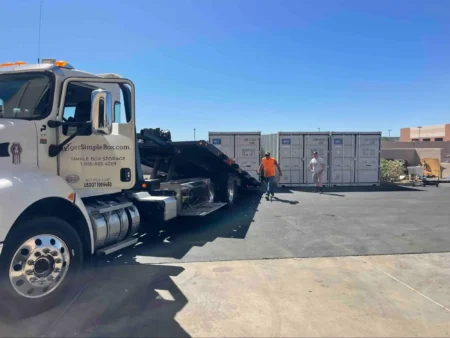
Even if a container fits on your property, our delivery trucks need enough room to back in, turn, and place it safely. Measuring your site ahead of time keeps your property safe and makes delivery day quick and easy.
Before our truck arrives, check that your property meets these basic requirements:
- Straight-Line Truck Clearance: 10ft units need ~40–50ft, 20ft units need ~70ft, and 40ft units need at least ~120ft of straight, open room for the truck to pull forward.
- Ground Surface: Solid, flat ground like packed gravel, concrete, asphalt, or dry packed dirt.
- Overhead Clearance: At least 14 to 16 feet of open vertical space free of low power lines, tree branches, or roof edges.
Container Cost Breakdown Per Size & Rent-to-Own Options
Container prices vary based on size, condition (New “One-Trip” vs. Used “Cargo-Worthy”), and your local branch (prices vary slightly between the Pacific Northwest and Southwest regions). Below are actual rental rates and purchase prices across our local yards:
Container Size | Monthly Rental | Buy Used (Cargo-Worthy) | Buy New (One-Trip) |
10ft Container | $150 – $179 / mo (Limited supply) | Rarely sold used | $3,950 – $5,100 (Modified w/ cargo doors) |
20ft Container (Most Popular) | $125 – $129 / mo | $1,900 – $2,950 | $3,300 – $3,750 (Standard) |
40ft Container | $185 – $209 / mo | $3,150 – $3,950 | $4,650 – $4,950 (Standard / High Cube) |
Note: All prices are subject to change. Sales tax and delivery are quoted separately.
- Renting: Perfect for short-term home moves, building fixes, or temporary store inventory.
- Buying & Rent-to-Own: Great for permanent storage or custom builds. Many customers start by renting and later switch to our flexible rent-to-own storage container options.
Frequently Asked Questions
What are the standard shipping container sizes?
The three most common sizes are 10ft, 20ft and 40ft. All are 8 ft wide and 8 ft 6 in tall outside. High cube versions of 20ft and 40ft containers are 9 ft 6 in tall.
How big is a 20ft shipping container?
A 20ft container is 20 feet long, 8 feet wide, and 8 feet 6 inches tall on the outside. It gives you about 150 square feet of usable floor space and ~1,170 cubic feet of room inside.
How much space do you need to deliver a shipping container?
You need flat ground, 14–16 feet of overhead space, and a straight path for the delivery truck. A 20ft container needs about 70 feet of straight room, while a 40ft unit needs about 120 feet.
Can a 10ft container replace a backyard shed?
Yes. A 10ft container gives you about 70 sq ft of weatherproof storage. Steel is far stronger than wood, resists rot and keeps pests out. Pair it with moisture control like DampRid to prevent condensation and rust.
What is the difference between a standard and a high cube container?
A high cube is one foot taller: 9 ft 6 in outside and about 8 ft 10 in inside, versus 8 ft 6 in and about 7 ft 10 in. Choose high cube for offices, workshops and living spaces.
Ready to Get the Perfect Container Size?
Stop guessing container dimensions or worrying about tight delivery spots. Let’s find the right box for your project and your budget.
Call Get Simple Box today at (855) 855-4269 or get an easy quote online! You can also speak with a local storage expert serving Washington, Oregon, Idaho, and Arizona.