
Understanding Shipping Container Grades: The Ultimate Buyer’s Guide
Shopping for an on-site storage solution can feel like navigating an intentional maze of industry shorthand. You will hear vendors throw around terms like ISO containers, cargo-worthy boxes, marine-grade steel, and conex boxes interchangeably.
At Get Simple Box, we believe in absolute transparency. We don’t hide behind wholesale broker grids or blind shipping manifests. This guide breaks down exactly what you are paying for when analyzing different container qualities, helping you protect your investment whether you need a compact 20ft container or a high-capacity 40 foot shipping container.
Why Our Customers Trust the Get Simple Box Team
Table of Contents
Demystifying the Industry Jargon
Before looking at conditions, it helps to understand why these structures are so resilient. Standard international shipping containers are engineered from CORTEN steel (a high-strength, atmospheric corrosion-resistant copper-alloy steel) designed to survive harsh ocean crossings. Whether a vendor calls it a cargo container or a conex box, they are all built to the same strict dimensional baselines. However, once a container leaves international maritime service, its grading changes completely based on age, structural wear, and physical history.
The Definitive Hierarchy of Shipping Container Grades
One-Trip (New) Containers
A one-trip shipping container is the closest thing to “brand new” available on the market. These units are manufactured overseas, immediately loaded with cargo for a single international voyage to North America, and then retired to our local yards upon arrival.
- The Visual Profile: Exceptional cosmetic condition. Expect a clean, uniform factory paint job (typically solid neutral tones), pristine marine-grade plywood floors, and perfectly straight corrugation panels with minimal to zero scuffs.
- The Operational Reality: The door hardware, locking bars, and rubber EPDM seals are completely fresh, allowing you to open and close the container with minimal effort.
- The Investment Value: This is the gold standard for residential storage, high-end commercial spaces, or structural modifications. A one-trip unit easily delivers a 20-to-30-year lifespan without requiring major structural maintenance.
“We have one-trip containers we’ve used in our own operations for over 20 years, and they still look and feel new because they haven’t been continually battered by multiple trips across the ocean.” > — Ross Black, CEO of Get Simple Box
IICL Grade (Institute of International Container Lessors)
IICL containers are premium used units that meet the extremely strict repair and structural standards set by the Institute of International Container Lessors.
- The Visual Profile: These are used boxes, meaning they will display minor surface scuffs, shallow dings, and localized patch repairs. However, their structural tolerances are held to incredibly tight metrics.
- The Operational Reality: Frames are perfectly true, corner castings are undamaged, and they are readily re-certified for international ocean transport.
- The Investment Value: An excellent middle ground for commercial logistics hubs, agricultural projects, or structural builds that require verified, top-tier structural integrity without the price tag of a brand-new unit.
Cargo Worthy (CW) Containers
A cargo worthy container is a retired intermodal unit that has been formally inspected by a certified surveyor and deemed structurally sound enough to safely carry freight on international rail and shipping lines.
- The Visual Profile: Expect a seasoned, working aesthetic. These boxes are typically 10 to 15 years old and feature visible surface rust, widespread dents, and mismatched paint from past shipyard maintenance patches.
- The Operational Reality: Despite the cosmetic wear, the structural bones are completely solid. There are no holes in the steel, the floors are fully intact, and the doors close tightly to form a secure seal.
- The Investment Value: This is the most practical choice for budget-conscious buyers who need rugged, permanent on-site storage where cosmetic appearance is secondary to utility.
“If your primary goals are long-term property protection, zero maintenance stress, and high resale value down the line, you should always look toward a new one-trip unit.” > — Ross Black, CEO of Get Simple Box
Wind and Water Tight (WWT) Containers
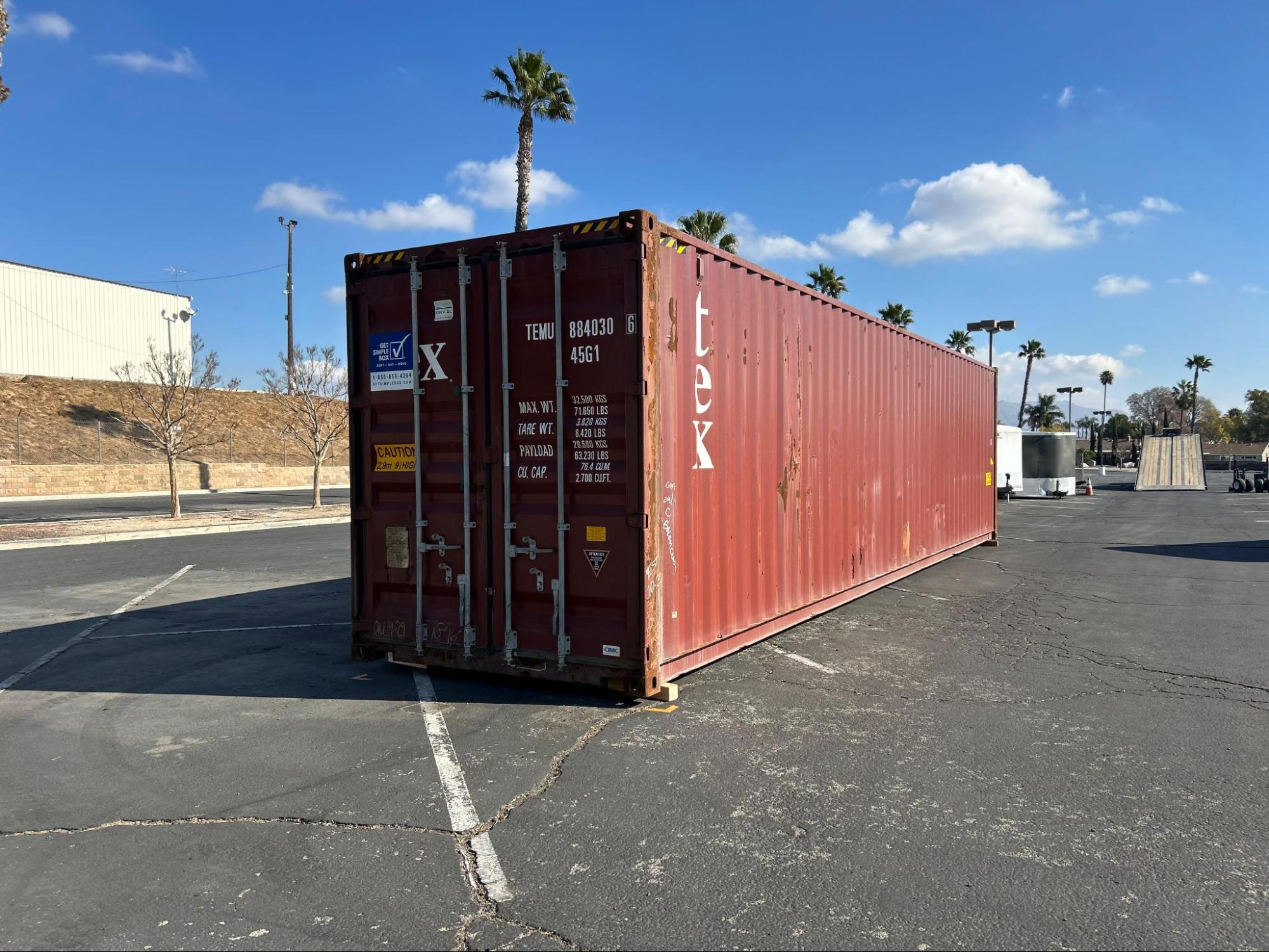
“Wind and Water Tight” is technically the lowest tier of operational used containers. While they are physically modified or checked to ensure rain cannot pass through the skin, they are no longer qualified for international cargo shipping.
- The Visual Profile: Significant cosmetic degradation. Heavy exterior corrosion, extensive denting, and faded, flaking paint are standard.
- The Operational Reality: The steel locking bars and hinges are often stiff or rusted, requiring substantial physical force to operate. While they don’t leak from the ceiling, their long-term structural life is highly unpredictable.
- The Investment Value: While many discount operations promote WWT units due to a low upfront sticker price, we intentionally avoid them for our inventory. The risk of quick degradation makes them a poor investment for high-value storage.
“Many online sellers claim a container is a fantastic deal simply because it’s labeled ‘Wind and Water Tight.’ In reality, that is the baseline designation for a retired, high-mileage used container.” > — Ross Black, CEO of Get Simple Box
Critical Buyer Caution Points (WWT Risks):
Before purchasing a WWT container from a high-volume online broker or a competitor yard, keep these industry realities in mind:
- The “As-Inspected” Trap: A container marked WWT only guarantees it was watertight at the time of its last shipyard inspection. Because the steel is already heavily weathered, pinholes can develop quickly after delivery when exposed to harsh seasonal elements.
- Hidden Floor Odors: Lower-grade used units are frequently retired due to harsh commercial history. WWT containers are much more likely to have absorbed chemical spills or deep forklift grease into the wood floors, creating unpleasant odors that can ruin household goods or sensitive inventory.
- Stiff, Corroded Hardware: Competitors who prioritize high-volume sales rarely service the door mechanisms of WWT boxes. If the hinges and locking bars are already corroded, our wet Pacific Northwest climate or high desert temperature shifts will often freeze them up completely, locking you out of your own gear.
As-Is Containers
As-Is units have been completely removed from commercial service due to structural damage. They frequently feature active roof leaks, rusted-out floor crossmembers, fractured structural welds, or severely warped doors that can no longer latch. We never buy or sell As-Is containers, and we strongly advise our customers to avoid them due to the high risk of hidden repair costs.
Container Grade | Ocean Trips | Structural Holes? | Door & Hardware Alignment | Plywood Floor Condition | Corner Castings & Frame |
One-Trip (New) | Single crossing | None | Perfect alignment; effortless operation. | Pristine; no scuffs or stains. | Flawless; factory spec. |
IICL (Premium Used) | Multiple | None | Highly true; functions smoothly. | Shallow dings; structurally sound. | Strict tolerances; undamaged. |
Cargo Worthy (CW) | Multiple | None | Solid alignment; weather-proof seal. | Seasoned; intact & forklift-ready. | Sound; certified for freight. |
Wind & Water Tight (WWT) | High-mileage | None (At inspection) | Stiff or rusted; requires force. | Often oil-stained or deeply gouged. | Weathered; retired from shipping. |
As-Is | Retired | Active Leaks | Warped; doors fail to close/latch. | Rotted crossmembers; soft spots. | Fractured welds; structurally compromised. |
The Get Simple Box 7-Point Quality Inspection Checklist
When you buy a shipping container online, you should never have to guess about its actual condition. We believe in providing complete transparency by posting detailed, high-resolution photos of the exact units available in our local yards, meaning the box you see on our website is the exact box delivered to your property. Before any container is photographed and listed for sale, our yard team puts it through a rigorous 7-point physical assessment to guarantee its quality:
- The Daylight Test: We step inside the container, close the cargo doors completely, and audit the interior ceiling and walls. If even a pinhole of light penetrates the dark interior, it indicates a structural failure that will let water in.
- Door & Hinge Alignment: We physically test the lock rods, handles, and hinges. If a container frame has been twisted during transport, the doors will bind. We verify they swing open and latch securely without prying.
- EPDM Rubber Gaskets: We inspect the black rubber seals lining the perimeter of the doors. Cracked, dry-rotted, or missing gaskets will allow wind-driven rain and pests inside.
- Plywood Interior Flooring: Marine grade container floors are built from tough, multi-layered birch or bamboo plywood. We check for soft spots, deep gouges, or signs of oil/chemical delamination.
- Understructure Crossmembers: We audit the steel ribs running beneath the floorboards. They must be free of catastrophic rust scaling and structural bends caused by forklift accidents.
- Roof & Weld Patches: We check the roof exterior for standing water pockets or sagging panels. Any past repairs must feature clean, continuous professional welds rather than temporary silicone caulk.
- Passive Ventilation: We ensure the factory-installed wall vents are completely unobstructed to allow proper cross-ventilation and prevent internal condensation buildup.
“We don’t play guessing games with quality. Our team performs our own comprehensive 7-point inspection, photographs the actual interior and exterior of every single container, and tests the door mechanics before it ever loads onto our delivery trucks.” — Ross Black, CEO of Get Simple Box
Pro Tip:
If you are buying a used container to use for local storage, always ask the seller if they let you choose your exact box. Many national wholesalers assign units blindly from a port manifest. A reputable local supplier will welcome you down to the yard so you can personally test the doors, step inside to check the floorboards, and pick out the exact container color and condition that fits your property best.

The Hidden Risks of Wholesalers, Craigslist, and Social Marketplaces
The rise of digital marketplaces has brought an influx of “cheap container scams.” Wholesalers and anonymous online brokers use stock photos to lure buyers with rock-bottom prices, but the operational reality tells a different story.
- The Middleman Markup: Many online vendors do not actually own a single piece of steel. They operate as digital brokers, collecting your payment up front and then sourcing the cheapest possible junk unit from a port terminal clearance lot.
- Zero Delivery Accountability: These brokers rarely own their delivery trucks. They hire third-party sub-contractors who may arrive without the proper tilt-bed equipment or local property maneuverability skills, leaving you stranded with a poorly placed unit.
- The Disappearing Customer Service Act: If your container arrives with a warped frame or a rusted-out roof, a remote digital broker has no local infrastructure to come out and fix it.
“When you deal with a discount container vendor on Facebook or Craigslist, you are almost always working with an out-of-state middleman who has never physically laid eyes on the box. They don’t own the truck, they don’t manage the driver, and they won’t answer your calls if that box leaks all over your tools three weeks later.” > — Ross Black, CEO of Get Simple Box

Container Condition & Grading FAQs
Why should I pay more for a one-trip shipping container if a used one does the same job?
It comes down to lifespan and total cost of ownership. A one-trip unit gives you an immaculate cosmetic look, effortless door operation, and a 25+ year lifespan with zero maintenance. Used containers save you money upfront, but they carry cosmetic blemishes and may require paint touch-ups and door-greasing down the line.
Can a cargo worthy container be used for residential storage immediately?
Yes. While “Cargo Worthy” technically means it’s certified for ocean transport, it guarantees that the box is completely structurally sound, watertight, and pest-proof, making it a reliable, secure option for home or ranch storage.
Why is there such a big price difference between container grades online?
Container pricing reflects its remaining lifespan and mechanical condition. A new one-trip unit costs more upfront but requires zero maintenance for 25+ years. Used tiers like “Cargo Worthy” save you money initially but carry cosmetic wear. Watch out for rock-bottom broker prices, they usually hide damaged “As-Is” boxes or massive third-party delivery fees.
Does the exterior color of the container tell me anything about its quality or grade?
Usually, yes. One-trip containers generally come in uniform, factory-neutral colors like light gray, tan, or dark green. Used cargo-worthy containers typically retain their original shipping line liveries (like Maersk blue, MSC yellow, or Tex red) along with extensive shipyard patch-paint.
Why do some container doors feel nearly impossible to open and close?
This happens for two reasons: dry-rotted hinge pins or an uneven foundation. If a container sits on unlevel ground, the rigid steel frame twists slightly, pulling the door geometry out of alignment. Elevating the corners on wood blocks instantly fixes this issue.

Secure Your Investment with Get Simple Box
Choosing the right container shouldn’t feel like a roll of the dice. Whether you are browsing our local inventory for used shipping containers for sale, or need a premium one-trip shipping container delivered straight to your property, our team is here to guide you.
With over two decades of local service, our own fleet of specialized tilt-bed delivery trucks, and thousands of verified 5-star reviews, you can store your assets with total confidence.
Ready to find your container? Contact the Get Simple Box team today to get current yard pricing and schedule a delivery with a team that stands behind every box we deliver.
Related Posts:
Moving with a Portable Storage Container in Snohomish, WA
Moving with a Portable Storage Container in Snohomish, WA Quick Summary: Moving with a portable storage container in Snohomish, WA
Get Simple Box vs PODS Burlington WA – Portable Storage
Get Simple Box vs. PODS Burlington WA | Storage Containers Quick Summary: Finding the right portable storage container in Burlington
Shipping Container Rental Maple Falls WA – Get Simple Box
Shipping Container Rental in Maple Falls WA: Mountain-Ready Storage Finding the right shipping container rental in Maple Falls, WA comes
Storage Container Delivery Requirements & Site Prep Guide – Get Simple Box
Storage Container Delivery Requirements: What to Expect on Delivery Day Quick Summary: Understanding key storage container delivery requirements is the
Portable Storage Containers Palm Springs CA | Get Simple Box
Portable Storage Containers in Palm Springs CA: Get Simple Box vs. PODS®, Aztec Containers & WillScot (Mobile Mini®) Finding the
Storage Container Rental in Phoenix: Get Simple Box vs. PODS, Southwest Mobile & AZ Containers
Storage Container Rental in Phoenix: Get Simple Box vs. PODS®, Southwest Mobile & AZ Containers Finding the right storage container