
Container Insulations
Shipping Container Ventilation: Stop Condensation & Heat
Shipping Container Ventilation: How to Stop Condensation and Keep Your Belongings Dry A steel container keeps out rain, wind, and
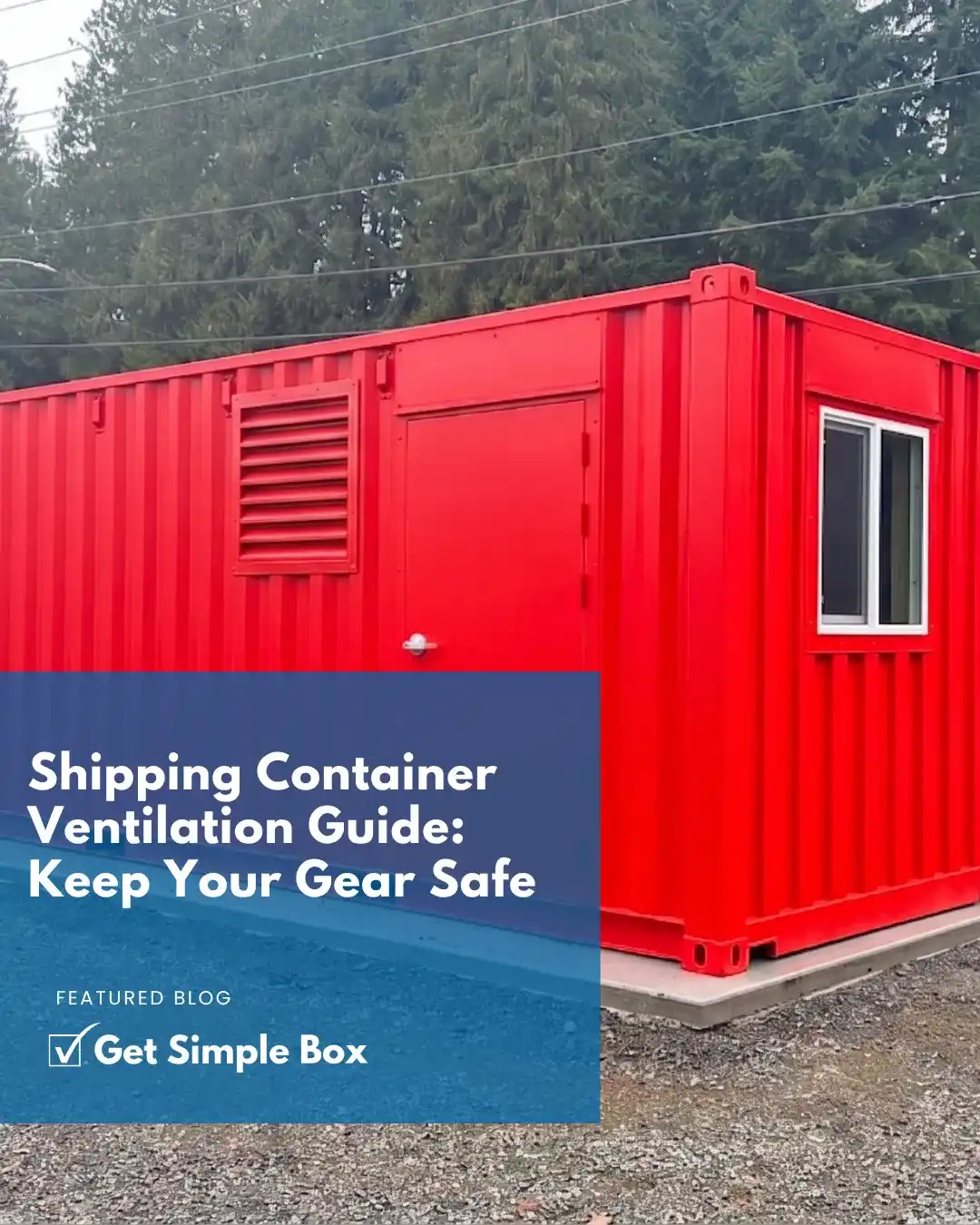
A steel container keeps out rain, wind, and thieves. What it doesn’t do on its own is move air, which is why shipping container ventilation is so important. Without airflow, heat and humidity get trapped inside, and eventually, you open the doors to find water dripping from the ceiling onto your stuff.
The fix is usually simpler than people expect: add vents so air can circulate, keep damp items out, and add insulation if your climate calls for it. At Get Simple Box, custom louvered wall vents on a container you buy cost $150 installed, or $65 for a DIY kit. (Rented containers can’t be modified, but there’s still plenty you can do inside. We cover that below.)
Container rain is condensation that forms on the inside of a steel container’s roof and walls, then drips onto whatever you’ve stored. It happens when warm, humid air meets cold steel and turns into water. It’s one of the most common causes of mold, mildew, and rust in stored items.
Repeat that for a few weeks and you get musty boxes, spotted leather, and rusty tools. It’s most common where days and nights swing a lot in temperature, in humid regions, and whenever anything damp goes into the container.
The good news is that the cycle is easy to interrupt once you know what’s causing it.

In most cases, yes. A closed steel container traps moisture, heat, and fumes. Adding wall or roof vents lets humid air escape, helps prevent container rain, clears out paint and fuel fumes, and can lower interior temperatures by roughly 15°F to 30°F, depending on your conditions.
Most containers do come with small plastic pressure-relief vents near the top corners. Those are built to equalize air pressure during ocean voyages. On land, they rarely move enough air to stop summer heat or winter condensation.
There’s one exception worth mentioning. If you’re storing a few completely dry items for a short time in a mild climate, you may never see a problem. But for long-term storage, big temperature swings, or anything sensitive to moisture, ventilation is worth the small cost.

You don’t always need all five. For many people, steps one through three do most of the work.
On a sunny 90°F day, the inside of an unventilated steel container can easily reach 120°F to 135°F. In winter, bare steel pulls outside cold straight in, which can expose liquids and electronics to freezing temperatures.
That summer heat is rough on electronics, leather, paint, and vinyl. In winter, the cold is hard on anything that can freeze or crack, and it sets up the condensation problem described above. These numbers are typical for direct sun and will vary with your location, season, and how the container is positioned.
Color makes a real difference:

Here are the main options, from the basic factory setup to full climate control:
What it does | Airflow | Available on rentals? | Cost | |
Factory corner vents | Basic pressure relief | Low | Yes (included) | Included |
Custom louvered wall vents | Steady, passive airflow | Medium to high | No (purchase only) | $150 installed / $65 DIY kit |
Solar roof exhaust fans | Actively pulls hot air out | Maximum | No (purchase only) | Contact us for a quote |
HVAC / mini-split systems | Full temperature control | Full climate control | No (purchase only) | Contact us for a quote |
For most storage needs, louvered wall vents are the sweet spot. They work around the clock with no power, no moving parts, and they’re designed to let air in while shedding rain. Solar fans make sense if you’re dealing with serious heat. HVAC is for containers you’ll use as an office, workshop, or living space.
Not sure how many vents you need? Tell us what you’re storing and where the container will sit, and we’ll recommend a setup that fits.
Place heavy items flat on the floor, build vertical wall tiers, stack heavy-to-light, and strap cargo into built-in steel D-rings to prevent shifting portable storage during tilt-bed transport.
Because your container moves on specialized tilt-bed trucks, packing correctly prevents items from sliding or jamming against the doors during transit:
Ventilation does the heavy lifting, but how you pack matters too. A few habits go a long way:
For most storage, start with ventilation. It’s the least expensive way to deal with humidity and heat. Add insulation when you want steadier temperatures, such as for a workshop, office, or winter storage of moisture-sensitive gear. Using both gives you the best protection.
If you’re leaning toward insulation, here are the three common types:
Applied directly to the interior steel and expanded to fill every rib and gap. It creates a seamless, airtight layer that greatly reduces condensation and lasts for decades.
Insulated blankets that hang from the lashing rings along the walls and ceiling.
Pre-made foam-core panels mounted on an interior stud frame, giving you a clean, flat finish.
Want the full breakdown? Read our guide to insulating shipping containers for winter storage.
Here’s the simple rule: we only make permanent modifications to containers you buy.
If you’re planning to store anything long term, buying and adding vents is usually the better route.
Get Simple Box | Standard moving pods | Used bargain sellers | |
Storage volume | 33% larger (20 ft units) | Smaller 12 ft to 16 ft units | Varies |
Custom modifications | Full in-house shop (owned containers) | Not allowed | DIY / self-service |
Construction | 14-gauge Corten steel | Aluminum / plastic tops | Varies |
Ventilation upgrades | Installed for $150 | None | None |
Local support | Local yard teams and drivers | Distant call center | No support |
⭐⭐⭐⭐⭐ “Outstanding Experience in Central Washington!”
-Jen, Real Estate Broker (WA State)

Yes. Standard containers have small, factory-installed pressure vents near the top corners. They’re designed to equalize air pressure during ocean voyages, so they rarely provide enough airflow to stop summer heat or winter condensation on land.
Usually, yes. Without airflow, a closed steel container traps moisture, humidity, and heat. Adding wall or roof vents lets humid air out, helps prevent container rain, clears paint and fuel fumes, and can lower interior temperatures by about 15°F to 30°F.
Container rain is condensation that forms on the inside of a container’s roof and drips down onto your belongings. It happens when warm, humid air touches cold steel, most often when temperatures drop overnight.
In direct sun, an unventilated steel container can reach 120°F to 135°F inside when it’s above 90°F outside. Light-colored containers and wall vents both help reduce that buildup.
You can reduce it. Storing only dry items, keeping things off the floor, and using moisture absorbers all help, and they’re your main options with a rental. For long-term storage, though, vents or insulation address the cause more effectively.
It depends on the container size, your climate, and what you’re storing. In general, placing vents high on one end and low on the other creates the best cross-flow. Call us and we’ll recommend a setup for your situation.
Louvered vents are designed to let air through while shedding rain. If pests are a concern where you are, ask us about screening options when you order.
It’s best not to. Damp items release moisture into the air, which then condenses on the ceiling. Let anything wet dry completely before it goes in.
Summer heat and winter dampness don’t have to take a toll on your gear. Whether you want a flexible monthly rental or a container of your own with custom vents and insulation, Get Simple Box delivers clean, secure storage right to your property.
Call us directly: (855) 855-4269
Shipping Container Ventilation: How to Stop Condensation and Keep Your Belongings Dry A steel container keeps out rain, wind, and
Moving with a Portable Storage Container in Snohomish, WA Quick Summary: Moving with a portable storage container in Snohomish, WA
Get Simple Box vs. PODS Burlington WA | Storage Containers Quick Summary: Finding the right portable storage container in Burlington
Shipping Container Rental in Maple Falls WA: Mountain-Ready Storage Finding the right shipping container rental in Maple Falls, WA comes
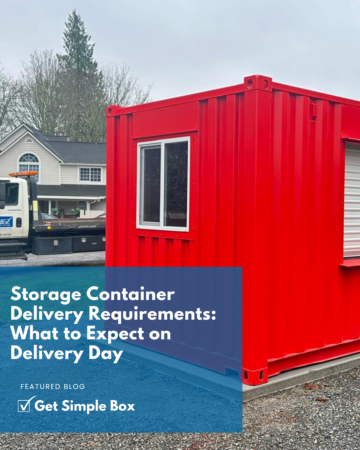
Storage Container Delivery Requirements: What to Expect on Delivery Day Quick Summary: Understanding key storage container delivery requirements is the
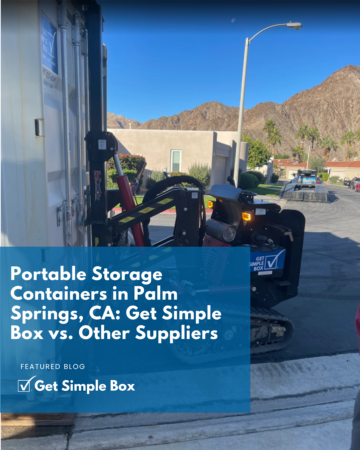
Portable Storage Containers in Palm Springs CA: Get Simple Box vs. PODS®, Aztec Containers & WillScot (Mobile Mini®) Finding the