
Updated November 2026
Quick answer: What a 40 ft shipping container costs depends on whether you rent or buy, new (one-trip) or used, standard or high cube, and how far it’s delivered. A 40 ft has about twice the floor space of a 20 ft, around 300 square feet inside. That’s enough for a contractor’s tools and materials, business inventory, or farm equipment. For this month’s price ranges, see our shipping container price index, which we update every month. To see current rental and purchase prices with delivery to your address, enter your ZIP in our online store or call (855) 855-4269.
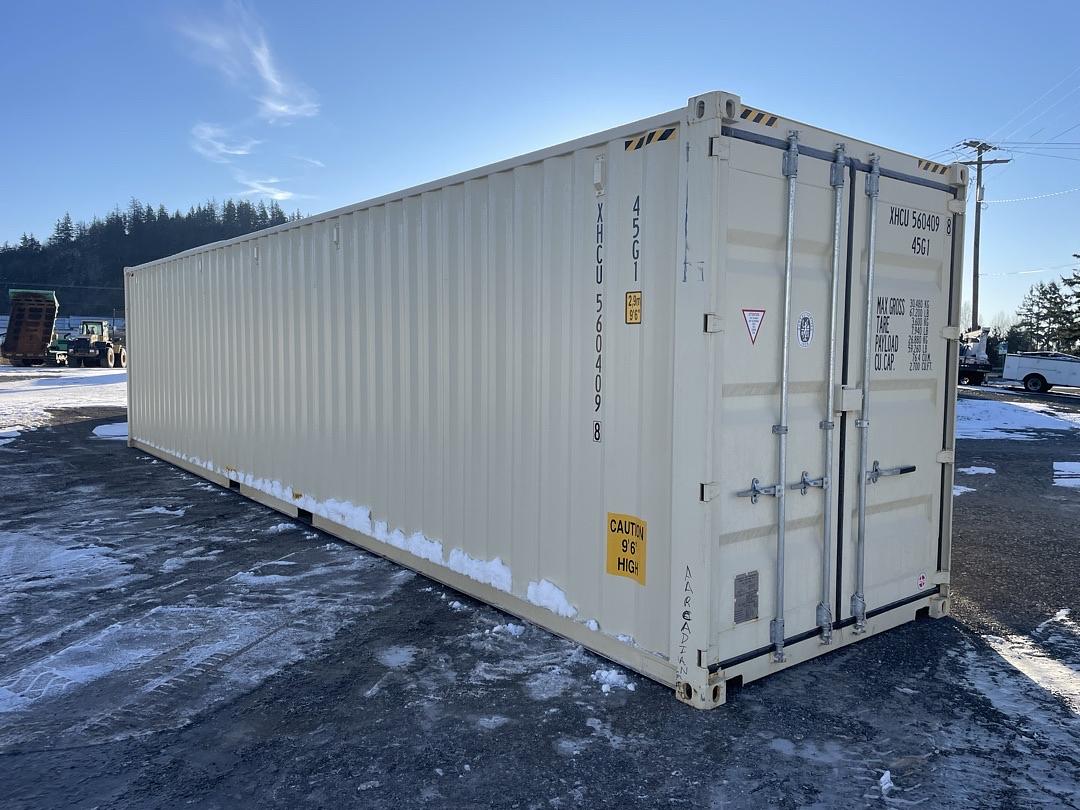
A 40 ft shipping container is a practical choice for businesses, contractors, farms, and property owners who need a lot of on-site storage. When you compare options, look at the full cost, including delivery, not just the container price.
Get Simple Box rents and sells 40 ft containers, with local delivery in our service areas.
Watch: 40 Foot Double Door High Cube New Shipping Container | Get Simple Box
In this guide:
- What affects the cost
- 40 ft container dimensions
- Should you rent or buy?
- New vs. used
- What to know before you order
- Frequently asked questions
How much does a 40 ft shipping container cost?
There’s no single price for a 40 ft container. These five things affect what you’ll pay:
- Condition: New one-trip containers usually cost more than used ones.
- Height: High cube containers can be priced differently than standard height.
- Location: Local inventory and demand affect prices.
- Delivery: Distance and site access change the delivery cost.
- Configuration: Specialty options like doors on both ends or an open side can cost more.
2026 price breakdown
| Option | Condition / type | Typical range (2026) | Best for |
|---|---|---|---|
| Monthly rental | Standard or high cube | $175 – $250 / month | Short-term projects, seasonal retail, temporary job sites |
| Purchase | Used (wind and watertight / cargo worthy) | $3,000 – $3,250 | Bulk dry storage, equipment yards, tight budgets |
| Purchase | New / one-trip (standard) | $4,550 – $5,500 | Long-term business use, customer-facing sites |
| Purchase | New / one-trip (high cube) | $4,650 – $6,599+ | Workspace builds, extra headroom, forklift loading |
Ranges are before delivery and vary by region and stock. They are not quotes.
Want current numbers? Our monthly shipping container price index shows the latest price ranges for new 40 ft high cubes and 20 ft containers by region, plus whether prices are going up or down.
Prices vary by location. Enter your ZIP in our online store to see current rental and purchase prices for your area.
Don’t forget delivery. The container price alone isn’t your full cost. Compare totals that include the container and delivery to your site.
40 ft container dimensions
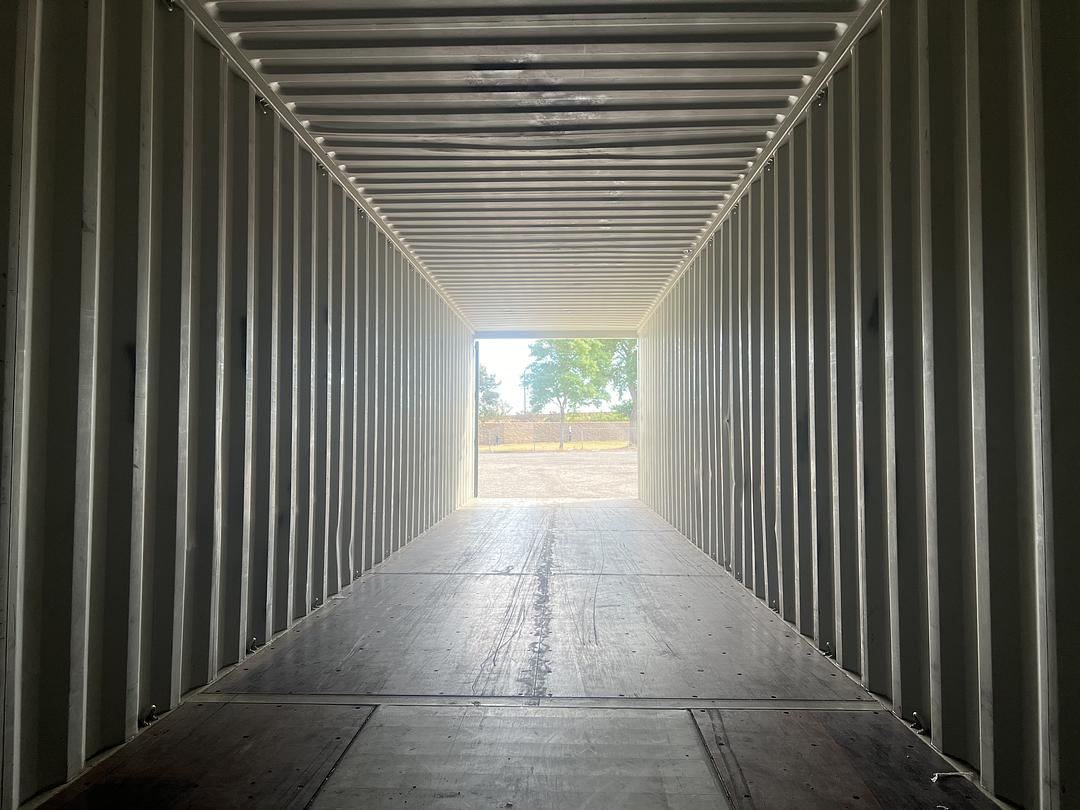
There are two common heights: standard and high cube. Both are 40 feet long and 8 feet wide on the outside.
| Standard 40 ft | 40 ft high cube | |
|---|---|---|
| Outside length | 40 ft | 40 ft |
| Outside width | 8 ft | 8 ft |
| Outside height | 8 ft 6 in | 9 ft 6 in |
| Inside volume (about) | 2,390 cubic feet | 2,690 cubic feet |
Inside measurements are a little smaller than outside because of the walls, floor, and roof.
Which one should you choose? A standard height works for most storage. Choose a high cube if you need more headroom for tall equipment or want to stack higher. If you’re storing something tall, check the inside height and the door opening, not just the outside size. See every inside measurement and weight on our 40 ft shipping container dimensions chart.
Should you rent or buy a 40 ft container?
It depends on how long you need it, how you’ll use it, and whether you want to own it.
Renting makes sense when:
- You need storage for a construction or remodel project.
- Your business has seasonal inventory.
- You want to avoid a big upfront cost.
- You only need storage for a set time.
- You want us to pick it up when you’re done.
Buying makes sense when:
- You need permanent or long-term storage.
- You plan to use it for several years.
- You want to modify the container.
- You’d rather own it than pay rent each month.
- You may want to sell or reuse it later.
There’s no set point where buying gets cheaper than renting. Compare your expected total rent with the purchase price, delivery, and any future moves. If you’re not sure, call us and we’ll help you compare.
New vs. used 40 ft containers
New (one-trip) 40 ft containers
A one-trip container usually made one cargo trip from the factory. It’s newer, with less wear than a used container.
- Cleaner look: Newer paint and fewer signs of use.
- Less wear: Doors, locking bars, and seals have seen less use.
- Good for businesses: A better fit where looks matter.
One-trip doesn’t mean perfect. It’s still smart to look over the unit you’re buying.
Used 40 ft containers
Used containers usually spent years shipping cargo overseas, and their condition varies. You may see:
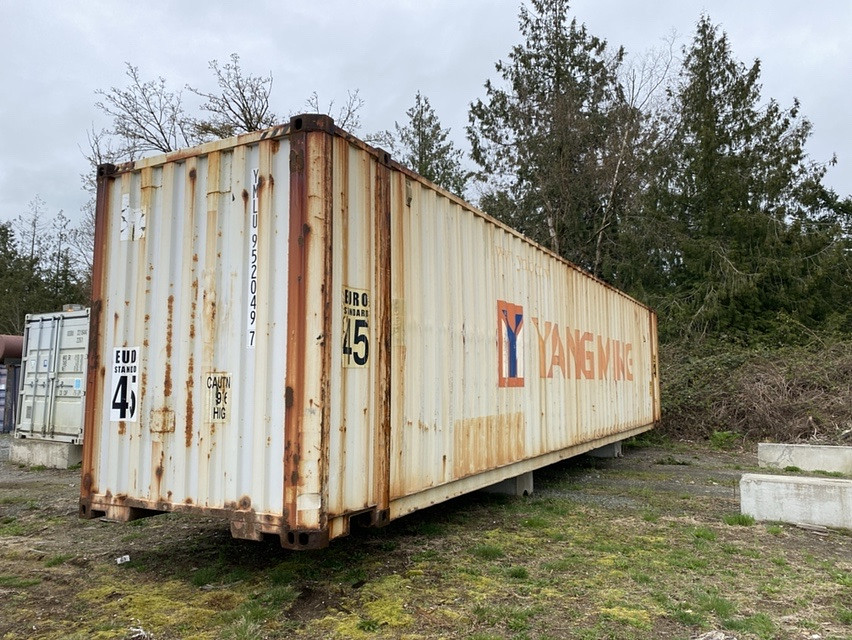
- Faded or mismatched paint
- Surface rust and scratches
- Dents
- More wear on door handles and locks
A used container can be a great value when looks aren’t important and it meets your storage needs. Learn more in our guide to buying a new vs. used shipping container.
What to know before you order a 40 ft container
1. Make sure you have room for delivery
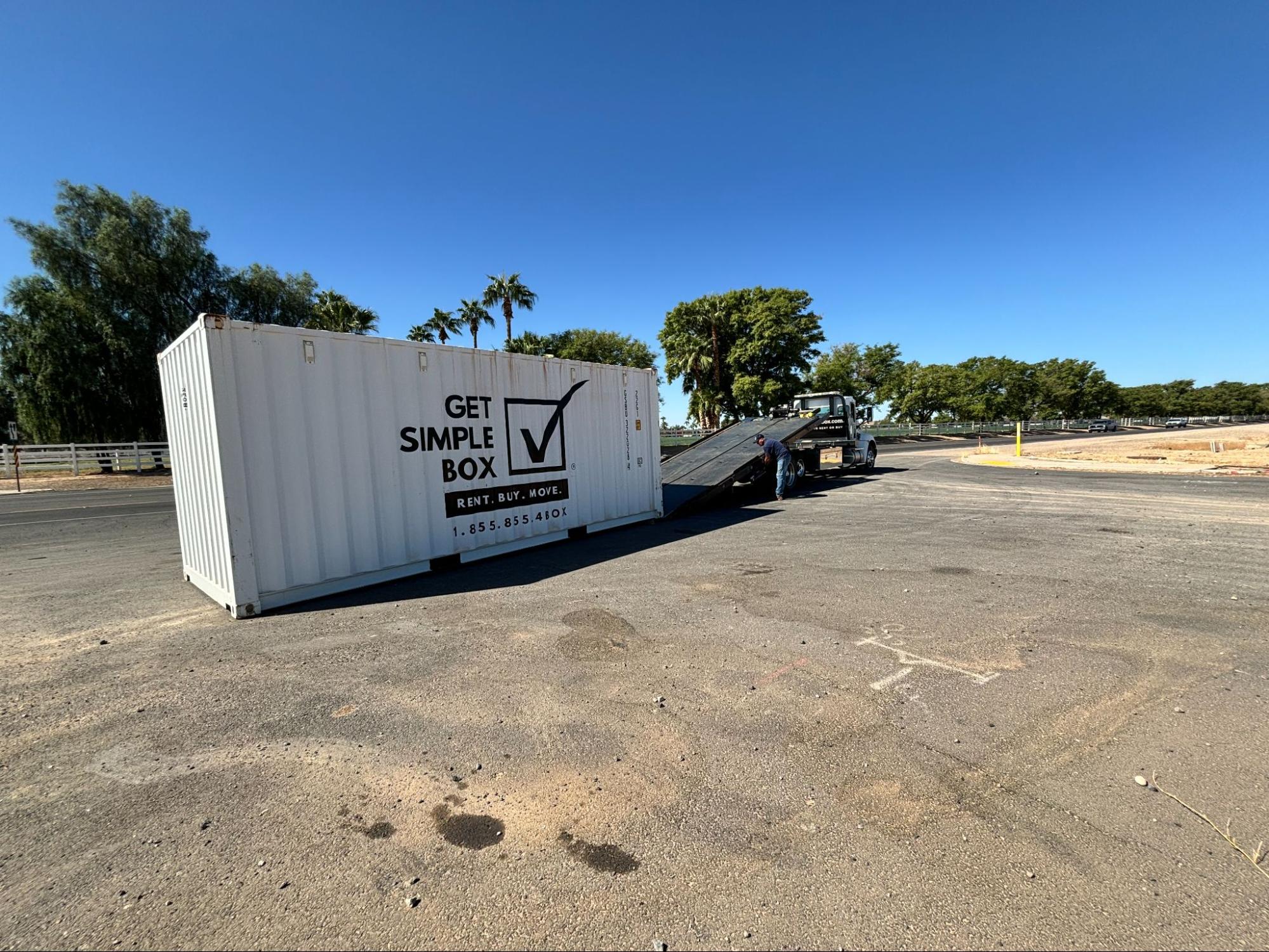
A 40 ft container needs a lot more than 40 feet of space. Our trucks need at least 120 feet of straight, clear space to back in, unload, and pull away, and 140 feet is better. Tight turns, slopes, trees, power lines, and low wires can all affect delivery. If you’re not sure, send your local team photos of the spot before you schedule. See how to prepare for container delivery.
2. Prepare a firm, level spot
A container should sit on firm, fairly level ground. Uneven or soft ground can make it settle and make the doors hard to open. Depending on your site, a gravel pad or blocks under the corners can help.
3. Think about how you’ll get to it
- Will you need to open the doors often?
- Will trucks or equipment need to get around it?
- Do you need room to load large items?
- Could future building or landscaping block it?
4. Know that loaded 40s can’t be moved
At Get Simple Box, a 40 ft container must be empty before we move it. If you might need it moved while it’s full, ask about a 20 ft instead. We can move a loaded 20 ft container, within weight limits.
5. Pick the right door setup
- Standard: Cargo doors on one end.
- Double door: Cargo doors on both ends.
- Open side: A side wall that opens for easy access.
Specialty containers aren’t available everywhere. Ask before you plan around one.
What our customers say
A tight spot doesn’t always mean a 40 can’t fit. Here’s what Darren said after working with our team in Lynden, WA:
⭐⭐⭐⭐⭐
“Get Simple Box was awesome! I got the 40 footer and had a tight spot to put it in. They went the extra mile for me and made it perfect. Thanks again. You guys are great!”
— Darren
Frequently asked questions
How much does a 40 ft shipping container cost?
It depends on whether you rent or buy, new or used, standard or high cube, your location, and delivery. Our shipping container price index shows this month’s ranges before delivery. For your exact price, enter your ZIP in our online store for current prices in your area.
How big is a 40 ft shipping container?
On the outside, a standard 40 ft is 40 feet long, 8 feet wide, and 8 feet 6 inches tall. A high cube is the same length and width but 9 feet 6 inches tall.
How much storage space does a 40 ft container have?
About 300 square feet of floor space inside. A standard 40 ft holds about 2,390 cubic feet, and a high cube holds about 2,690 cubic feet.
What’s the difference between a standard 40 ft and a high cube?
Height. A high cube is one foot taller, which gives you more room inside for tall items or stacking.
Is it better to rent or buy a 40 ft container?
Renting is usually better for short-term projects. Buying makes more sense for long-term storage or if you want to modify it. Compare the total cost for how long you’ll need it.
Can a 40 ft shipping container be moved while loaded?
Not with Get Simple Box. A 40 ft must be empty before we move it. We can move a loaded 20 ft, within weight limits.
How much space do I need for 40 ft container delivery?
At least 120 feet of straight, clear space, and 140 feet is better. The exact space depends on the approach, turns, and ground. Send us photos if you’re not sure.
Can I put a 40 ft container on gravel or blocks?
Yes, in most cases. A firm gravel pad or blocks under the corners works well. The key is firm, fairly level support so the container doesn’t settle unevenly.
Is a 40 ft container right for your project?
A 40 ft container is a great fit when you need a lot of secure, weather-resistant storage in one place, such as:
- Contractors storing tools, materials, and equipment
- Businesses with inventory and seasonal overflow
- Farms and ranches
- Commercial properties that need more storage
But bigger isn’t always better. A 20 ft container is easier to place and can be moved while loaded. The best choice is the size that fits your needs and your property.
Ready to get started? See 40 ft prices and order online, find your nearest Get Simple Box location, or call us at (855) 855-4269.

Container Relocation: How to Move a Shipping Container
Learn how container relocation works, step by step: ownership, photos, site access, dispatch fee and move day. Request a quote from Get Simple Box.
Shipping Container Business Opportunity: Licensing with Get Simple Box
Imagine running a local business that serves your neighbors, stays strong through economic changes, and still leaves you with time
Shipping Container Sizes & Dimensions: What Size Do I Need?
Shipping Container Sizes & Dimensions: What Size Do I Need? If you are asking, “What size shipping container do I
How to Rent a Shipping Container: Step-by-Step Guide
How to Rent a Shipping Container: A Step-by-Step Guide Quick Summary To rent a shipping container, pick your size (10ft,

Shipping Container Ventilation: Stop Condensation & Heat
Shipping Container Ventilation: How to Stop Condensation and Keep Your Belongings Dry A steel container keeps out rain, wind, and
Moving with a Portable Storage Container in Snohomish, WA
Moving with a Portable Storage Container in Snohomish, WA Quick Summary: Moving with a portable storage container in Snohomish, WA