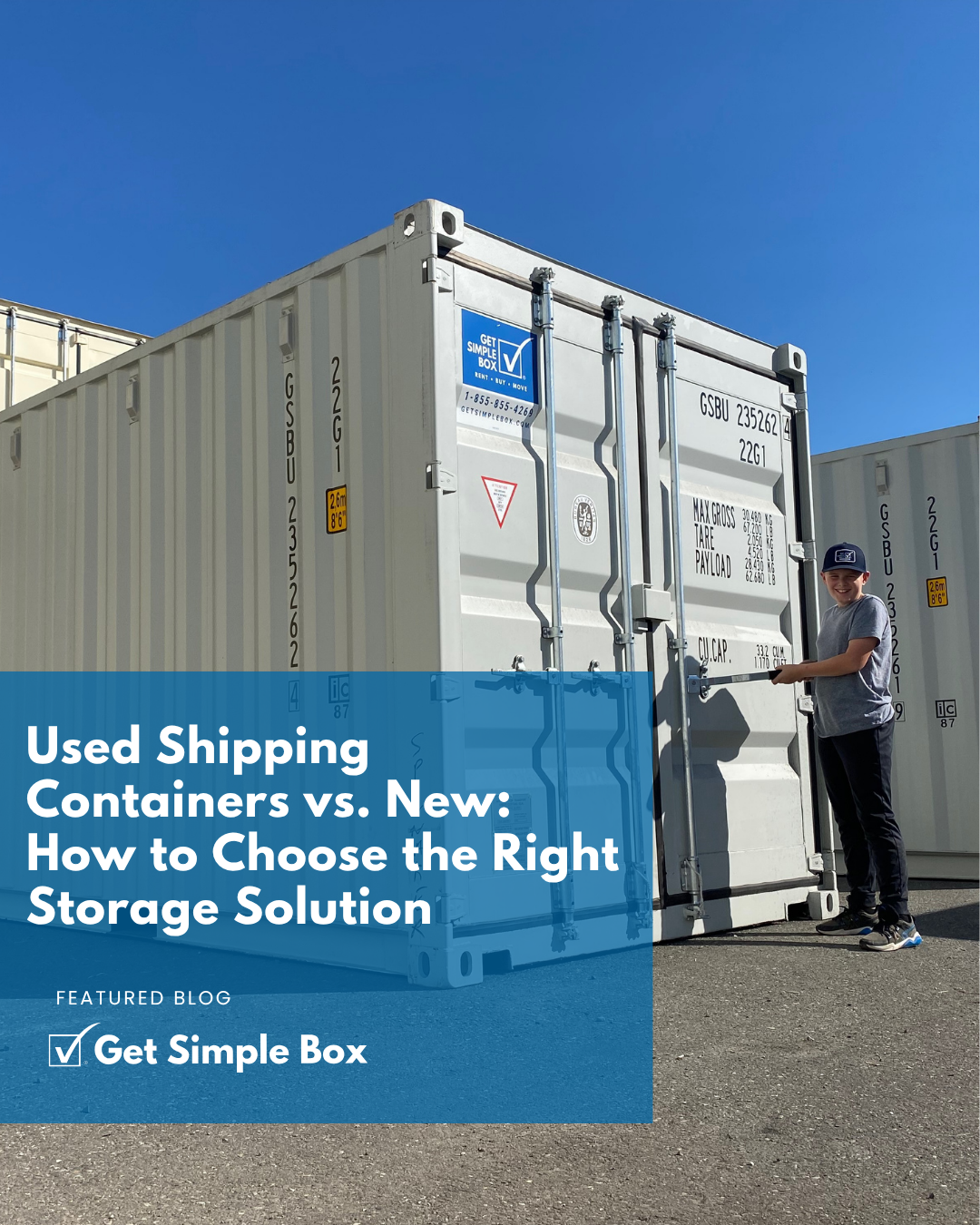
Used Shipping Containers for Sale vs. New: How to Choose the Right Storage Solution

If you need a secure storage solution or plan to build an office conversion, browsing used shipping containers for sale is a smart, cost-effective choice. Made from ultra-durable Corten steel, these tough boxes can serve as ocean cargo carriers or on-site portable storage.

However, when you start buying a shipping container, you face one big question: Should you buy a new one-trip container or choose a cheaper used shipping container?

In this guide (and the video below featuring Ross Black, Owner and CEO at Get Simple Box), we compare prices, shipping container lifespan, condition grades, and overall strength to help you make the best buying decision.

Table of Contents

First, A Quick Clarification: One-Trip vs. Multi-Trip Containers

In the conex box world, “new” and “used” describe how many trips a box has made:

  • New Shipping Containers (One-Trip Units): These are as new as you can buy in North America. They are built overseas and make a single trip carrying prior cargo across the ocean. Think of a one-trip box like a new car that has just a few delivery miles on it.
  • Used Shipping Containers (Multi-Trip Units): These trip units spent 10 to 15+ years transporting goods across the globe. They show plenty of wear and tear on the outside, but their structural soundness remains strong for simple storage.

Understanding Shipping Container Grades (WWT vs. Cargo Worthy)

When shopping for used shipping containers for sale, learning the grading system helps you avoid buying a box that leaks:

  • Wind and Watertight Container (WWT): This is the standard grade for land storage. A wind and water tight container guarantees no light or rain gets inside, keeping your stuff safe from bad wind and rain.
  • Cargo Worthy Container (CW): A certified inspector checks these boxes to prove they can still be used for international shipping. They have an official CSC plate attached to the door showing they can be stacked on cargo ships.

5 Key Differences: New vs. Used Shipping Containers

When deciding which option is right for you, it helps to look at five main categories: appearance, doors, interior features, price, and customization.

1. Outside Look and Cosmetic Condition

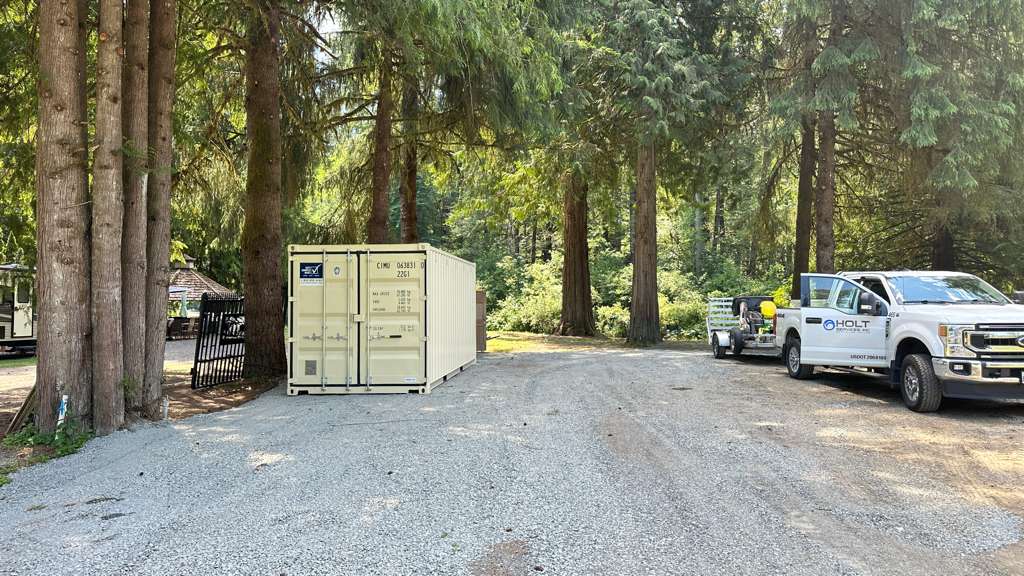
  • New Containers: These have a clean, customer-facing look with fresh paint (usually light gray or tan) and zero surface rust.
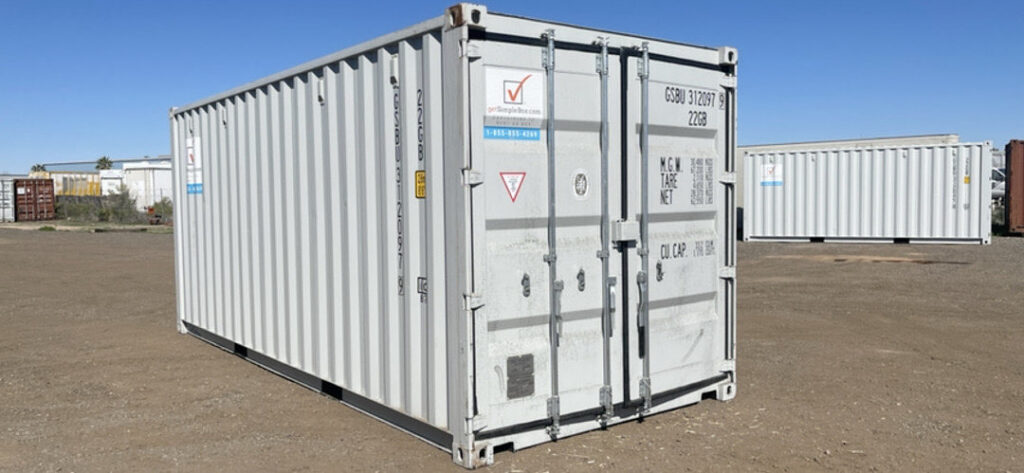
  • Used Containers: Expect to see cosmetic wear like dings, small dents, scrapes, and spots of rust. They usually come in ocean shipping colors like dark green, blue, or red.

2. Door Seals, Gaskets, and Locks

  • New Containers: Built with fresh rubber door gaskets and straight locking bars. They are easy to open and close. They also include a built-in lock box to keep your padlock safe from bolt cutters.
  • Used Containers: The door alignment can be a bit stiff from years of heavy use. The door seals might look worn, but they still shut out the weather.

3. Inside Condition, Flooring, and Vents

  • New Containers: Inside, you get clean wood floors and straight walls. They also come with extra air vents to boost airflow, which helps protect items that react badly to heat or moisture.
  • Used Containers: The floors show scuffs, stains, and scratches from years of loading cargo. They usually have fewer vents, so you may need to add more if you store sensitive goods.

4. Purchase Price and Value

  • New Containers: Cost about $1,000 to $2,000 more up front. However, you get a 25+ year service life, low ongoing maintenance, and strong resale value later on.
  • Used Containers: Offer an easy, cost-effective price point. If you just need simple ground-level storage and do not care about looks, a used unit is a great deal.

5. Modifications and Extra Features

  • New Containers: Because the Corten steel walls are flat and rust-free, it is much cheaper and easier to add doors, windows, mobile offices, or build a shipping container home.
  • Used Containers: Dents and surface rust can make cutting, welding, and framing more work.

Container Dimensions: Finding the Right Fit

Getting the right size is just as important as choosing between new vs. used. Standard containers measure 8 feet wide and 8.5 feet tall.

Here are the main sizes to know:

  • 20ft Containers: Great for home driveways or smaller job sites. See our full guide on 20ft shipping container dimensions for exact inside and outside measurements.
  • 40ft Standard Containers: Best for big job sites, farms, or storing lots of inventory. Check out our 40ft container dimensions page for detailed specs.
  • 40ft High Cube Containers: Need extra headroom? A high cube container gives you an extra foot of height (9.5 feet tall). This makes it great for tall equipment or adding ceiling insulation. Read our 40ft high cube container dimensions guide to see exact height clearances.

Our Recommendation: Which Should You Buy?

For most buyers and business owners, we suggest buying a new 20ft shipping container. A one-trip box holds its value, looks great on your job site, and has smooth doors that do not stick. It gives you the best value over time.

However, if you just need cheap, basic shipping and storage, a wind and watertight (WWT) used container gets the job done for a much lower purchase price.

What Our Customers Say

5 Stars – “They took care of us like we were family!”


“Everything is this process was as simple as can be! The communication, drop off, pick up, storage and my neediness of changing days! They took care of us like we were their family! Highly recommend!”Kayla (Verified Customer Review)

Frequently Asked Questions (FAQs)

How much cheaper is a used shipping container? 

On average, a used container costs about $1,000 to $2,000 less than a new (one-trip) box of the same size.

Are used shipping containers wind and watertight?

Yes. Good container sellers inspect used boxes to make sure they are wind and watertight (WWT). This means no rain or water will leak in to damage your stuff.

What is the difference between WWT and Cargo Worthy containers?

A wind and watertight container keeps rain and wind out for storage on land. A cargo worthy container is strong enough to travel on ocean ships and has a valid CSC plate attached.

Can I turn a used shipping container into an office or home?

Yes, but you may need to fix small problems first. You will need to clean off surface rust and straighten dented walls before adding windows, doors, or framing for a shipping container home.

How long does a shipping container last?

A used container that spent 10 to 15 years at sea can easily last another 10 to 20 years for storage with simple ongoing maintenance. A new one-trip container can last 25 to 30+ years on your property.

Ready to Find Your Storage Solution?

At Get Simple Box, our goal is simple: Simple containers delivered with care by people who care. Whether you need a pristine new container for a custom project or a budget-friendly used container for backyard storage, we are here to help.

Contact your local Get Simple Box team today to find the perfect container for you!

Related Posts:

Facebook
Twitter
LinkedIn

Share:

Facebook
Twitter
LinkedIn
Read More

Related Posts