
How to Prepare Your Site for a Fast, Local Delivery
When you purchase or rent a storage container you want your local delivery to be simple and predictable.
If you’re preparing for shipping container delivery, you’re probably asking:
- Do I have enough space?
- Is my ground stable enough?
- Will the truck fit safely?
- Will they damage my property when they place the container?
Those are the right questions.
After more than 50,000 container deliveries across Washington, Oregon, California, and Arizona, we know what makes placement smooth, and what causes unnecessary delays.
This guide answers the core question:
How do I prepare my site for local delivery of a shipping container?
With the right preparation, local delivery isn’t stressful. It’s straightforward.
Table of Contents
How Do I Prepare My Site for Local Delivery of a Shipping Container? (Quick Answer Guide)
Preparing your site for local delivery is simpler than most people expect. The goal is straightforward: give the truck room to work and give the container a solid place to land.
At a minimum, your site should have:
- 60–100 feet of straight-line clearance (depending on container size)
- 12–14 feet of width clearance
- 14 feet of vertical clearance (watch power lines and tree branches)
- A level, stable surface like gravel, asphalt, concrete, or well-compacted ground
- A clear path free of vehicles, debris, or soft soil
When those basics are in place, shipping container delivery is smooth and predictable.
Most residential properties, commercial lots, and job sites can accommodate container delivery with minor prep. And if you’re unsure, send us photos. Our team reviews sites before scheduling local delivery so there are no surprises on delivery day.
What Space and Access Do You Need for Local Delivery of a Shipping Container?
Space and access are the two most important factors in a successful shipping container delivery. If the truck can’t safely access the placement area, delays happen.
Here’s what you need to consider before your local container delivery service arrives.
1. Straight-Line Placement Area
Tilt-bed and roll-off delivery trucks require room to:
- Back into position
- Tilt the bed upward
- Slide the container off smoothly
For a 20-foot shipping container delivery, plan for:
- 60–70 feet of straight-line clearance
For a 40-foot container delivery:
- 90–100 feet of straight-line clearance
If you’re placing the container in a tight space, tell us ahead of time. Our trained delivery drivers are experts, but planning is key.
2. Width Requirements
You’ll want:
- Minimum 12 feet of clear width
- Ideally 14 feet for easier maneuvering
Check for:
- Fence openings
- Narrow driveways
- Landscaping pinch points
- Building overhangs
3. Overhead Clearance
Containers are about 8’6″ tall (standard) or 9’6″ tall (high cube). During placement, the truck bed raises higher than the container itself.
You’ll need:
- At least 14 feet of overhead clearance
- No low tree branches
- No overhead wires
- No building eaves in the delivery path
Commonly asked questions about container delivery
Can a container be placed on a slope?
Yes, but the placement area must be level. Minor slope in the approach is fine; the final resting spot should be flat.
What if access is tight?
Send photos to our team before your shipping container delivery is scheduled. We’ll assess options.

What Ground Preparation Is Required for Local Delivery and Container Delivery Setup?
Ground preparation isn’t just about getting through delivery day. It determines how your container performs for years.
A shipping container weighs anywhere from 1,800 to over 8,000 pounds empty, and much more once loaded. That weight is transferred to four corner castings. If the ground underneath isn’t stable and level, you’ll eventually notice it in the doors, the frame, and the overall usability.
Before your local delivery, take the time to get the base right.
Acceptable Surfaces for Container Delivery
These surfaces provide the stability needed for long-term performance:
- Concrete pad (ideal for permanent placement)
- Asphalt
- Compacted gravel (most common for residential and jobsite container delivery)
- Well-compacted dirt (only if properly packed and dry)
Compacted gravel is often the sweet spot. It drains well, distributes weight evenly, and is cost-effective compared to pouring concrete.
Surfaces to Avoid
Even if they look fine at first glance, these surfaces often create problems:
- Freshly poured, uncured concrete
- Soft sand or loose fill
- Wet grass or saturated soil
- Uneven or shifting ground
Soft ground is one of the most common issues we see during shipping container delivery. The truck may be able to access the area, but once the container is placed, it can settle unevenly over time.
Why Leveling Matters More Than You Think
Containers are built strong, but they are designed to sit level.
When a container isn’t level:
- Doors become hard to open or won’t latch correctly
- Weight shifts unevenly to one corner
- The frame can twist under load
- Water may pool near entry points
Even a small slope can cause noticeable door alignment issues. The good news? Leveling doesn’t have to be complicated.
Simple Leveling Solutions
If your site isn’t perfectly level, here are common solutions:
- Gravel pad installation (4–6 inches deep, compacted)
- Railroad ties or pressure-treated wood runners
- Concrete pier blocks under corner castings
- Steel shims for minor adjustments
For jobsite container delivery, a compacted gravel base is typically the most practical option. It allows repositioning if needed and handles heavy equipment traffic better than dirt alone.
If you’re unsure whether your ground is sufficient, our team can review photos before scheduling local delivery. A quick check now prevents headaches later.
How the Get Simple Box Local Delivery Process Works (4 Simple Steps)
A professional local delivery of your shipping container should feel organized, not improvised. After more than 50,000 shipping container deliveries across Washington, Oregon, California, and Arizona, we’ve built a process that removes guesswork before delivery day ever arrives.
Here’s what working with our local container delivery service actually looks like.
Step 1: Decide Whether to Rent or Buy a Shipping Container
The right delivery starts with the right container. Choosing correctly upfront prevents limitations, delays, and unnecessary costs later.
- Short-term need? A storage container rental is usually the right fit.
- Long-term placement or modifications? Purchase a shipping container.
We’ll ask:
- What project are you working on?
- How long do you need the container?
- What are you storing?
- Will you need permanent modifications?
- Is this residential, commercial, or jobsite container delivery?
Step 2: Review Your Site Before Local Delivery Is Scheduled
This is where planning makes the difference. Before we confirm your local delivery, we make sure your site supports safe and precise placement.
We review:
- Exact placement location
- Access path for the delivery truck
- Ground stability and leveling
- Overhead clearance
- Door orientation
Most providers schedule first and troubleshoot later. We assess first so delivery works the first time.
Step 3: Schedule Your Shipping Container Delivery
Once your site is confirmed, scheduling becomes straightforward. You’ll know exactly what to expect before delivery day arrives.
You’ll receive:
- A confirmed delivery window
- A site readiness checklist
- Door orientation confirmation
- Direct contact information
Our trained delivery drivers specialize in container placement, not general freight, which ensures your shipping container delivery is controlled and precise.
Step 4: Storage Container Delivery Day, Controlled and Precise
By delivery day, everything should already be aligned. Your only job is to make sure the access path is clear.
- Move vehicles and equipment
- Remove debris
- Secure pets
- Confirm final placement location
Our driver will align the truck, raise the tilt-bed safely, and lower the container evenly onto your prepared surface. Most placements take minutes once positioned, no improvising, no scrambling.
Why This Process Matters
A smooth shipping container delivery isn’t luck, it’s preparation. When a local container delivery service plans placement before the truck rolls out, delivery becomes predictable.
You stay focused on your project. We handle the logistics.

What Size Container Is Best for Your Local Delivery? (10ft, 20ft, 40ft Guide)
Choosing the right container size impacts more than just storage capacity. It affects site preparation, access requirements, long-term usability, and even how smooth your local delivery will be.
Many people underestimate how much space they actually need. Others overestimate and create unnecessary placement challenges. The right size strikes the balance between efficiency and flexibility.
Here’s how to think through it.
10-Foot Container
Approximate exterior dimensions:
- 10’ long
- 8’ wide
- 8’6” tall
Best for:
- Residential storage during remodels
- Garage overflow
- Small job sites
- Properties with tight access
A 10-foot container is compact but surprisingly functional. It’s ideal when driveway space is limited or when access clearance is narrow.
Because of its shorter length, container delivery requires less straight-line space than larger units. That makes it easier for local container delivery service placement in tighter residential settings.
If you’re storing seasonal items, tools, or staging materials for a short-term project, this size often works well.
20-Foot Shipping Container (Most Popular)
Approximate exterior dimensions:
- 20’ long
- 8’ wide
- 8’6” tall (standard)
- 9’6” tall (high cube option)
This is the workhorse of the industry.
A 20-foot shipping container is the most common choice for both container sales and storage container rental. It provides substantial storage without requiring the extended clearance of a 40-foot unit.
It’s ideal for:
- Construction jobsite container delivery
- Small business inventory storage
- Equipment storage
- Residential moves
- Long-term property storage
The high cube version adds an extra foot of interior height, which makes a noticeable difference when storing tall equipment, pallet racking, or stacked materials.
For most customers planning local delivery, the 20-foot size offers the best balance of capacity and placement flexibility.
40-Foot Shipping Container
Approximate exterior dimensions:
- 40’ long
- 8’ wide
- 8’6” tall (standard)
- 9’6” tall (high cube option)
If you need serious storage volume, this is your solution.
A 40-foot container is commonly used for:
- Large commercial storage
- Bulk inventory
- Construction staging
- Agricultural equipment storage
- Multi-department overflow
However, larger containers require significantly more straight-line clearance during shipping container delivery, often 90–100 feet. That means site access must be evaluated carefully before scheduling.
When access allows, a 40-foot unit is often more cost-effective per cubic foot than multiple smaller containers.
Understanding Interior Capacity (Where the Real Value Is)
Here’s where many people miss the bigger picture.
Traditional portable storage units often sacrifice interior space due to framing design. Our containers provide full-width, industrial-grade steel construction, which results in approximately 33% more usable interior space compared to many alternative storage solutions.
That means:
- More pallets per row
- Fewer trips accessing stored materials
- Better long-term storage efficiency
- Greater value per square foot
When you’re comparing shipping container delivery options, interior capacity matters just as much as exterior dimensions.
How Size Affects Local Delivery Planning
Container size directly impacts delivery logistics:
- Larger containers require more straight-line clearance
- Heavier units require stable, compacted ground
- Door orientation becomes more important with longer units
- Turning radius increases with size
Before scheduling local delivery, measure both the placement area and the approach path. A container might fit the final location perfectly, but the truck still needs room to position and tilt.
If you’re unsure which container size works best, we’ll walk through your site layout and help you choose based on both space and access.
Pro Tip: Plan for Growth, Not Just Today
Most customers regret choosing a container that’s too small, almost no one regrets having a little extra space.
If your budget and site allow, sizing up often saves you from needing a second container later. That’s especially true for jobsite container delivery, where materials and tools tend to multiply over time. When in doubt, think six months ahead, not just delivery day.

5 Common Local Delivery Mistakes That Cause Delays (And How to Avoid Them)
Most shipping container delivery issues aren’t mechanical problems. They’re planning problems.
The good news? Nearly all of them are preventable with a little foresight before your local delivery is scheduled. Here are the most common mistakes we see, and how to avoid them.
1. Forgetting About Overhead Lines
Power lines, cable lines, tree branches, carports, and building overhangs are one of the biggest placement obstacles.
During container delivery, the truck bed tilts upward, often higher than the container itself. What looks clear at ground level may not be clear overhead.
How to avoid it:
Walk the entire access path and physically look up. If you see low lines or branches, address them before delivery day.
2. Underestimating Soft Ground
Dry dirt can turn unstable under the weight of a fully loaded delivery truck. Remember, the truck plus container can weigh tens of thousands of pounds.
Wet soil, recently filled areas, or ground that hasn’t been compacted properly can shift or sink during placement.
How to avoid it:
If the ground is questionable, add compacted gravel or wait for conditions to improve. A stable base protects both the truck and your container.
3. Blocking the Access Path
This sounds simple, but it’s common.
Parked vehicles, equipment, trailers, stacked materials, and even dumpsters often sit in the exact space needed for maneuvering.
Even if the final placement area is clear, the truck needs room to align, back in, and tilt safely.
How to avoid it:
Clear more space than you think you need. Extra maneuvering room makes local delivery smoother and faster.
4. Not Confirming Door Orientation
Once a container is placed, moving it isn’t as simple as nudging it a few inches. Repositioning requires equipment and rescheduling.
We’ve seen customers realize after placement that the doors face the wrong direction, creating workflow issues for years.
How to avoid it:
Decide ahead of time:
- Do you want doors facing the driveway?
- Toward a building?
- Away from street visibility?
Think about daily access, not just where it fits.
5. Choosing the Wrong Container Size
Ordering too small often leads to overcrowding and inefficiency. Ordering too large without checking site access can complicate container delivery.
Size affects both storage usability and placement logistics.
How to avoid it:
Measure your site and think about future storage needs, not just what you’re storing today. When in doubt, talk it through before scheduling local delivery.
The thread running through all of these mistakes is simple: assumptions.
A trusted local container delivery service will ask detailed questions upfront so delivery day feels uneventful, in the best way possible.
That’s how it should be.
Real Story
A commercial contractor preparing for a retail remodel needed a fast jobsite container delivery. Access was tight. The site included overhead signage and narrow entry points.
We reviewed photos in advance, confirmed placement strategy, and scheduled delivery during off-peak hours. The container was placed precisely the first time.
No delays. No re-delivery fees. The project stayed on schedule.
That’s what proper planning and experienced delivery drivers look like.

Why Get Simple Box Is the Smart Choice for Local Delivery and Shipping Container Delivery Service
Not all shipping container delivery services operate the same way, especially when it comes to true steel containers, commercial placement, and jobsite precision.
If you’re comparing options for local delivery, here’s how the models differ.
Feature | PODS® | U-Haul U-Box | Local Classified Seller | |
Full Steel Shipping Containers | ✅ | ❌ (Composite/Portable Units) | ❌ (Portable Boxes) | Varies |
Container Sales (Ownership Option) | ✅ | ❌ | ❌ | Varies |
Permanent Modifications Available | ✅ (Owned Containers Only) | ❌ | ❌ | Rare |
Jobsite & Commercial Delivery Expertise | ✅ | Limited | Limited | ❌ |
Site Prep & Access Planning Support | ✅ | Limited | Limited | ❌ |
✅ | National Corporate Model | National Corporate Model | ❌ |
What This Means for Your Local Delivery
If you’re searching for shipping container delivery near me, the biggest difference isn’t just who can deliver, it’s what they’re delivering and how they place it.
PODS® and U-Haul specialize in portable moving containers designed for short-term residential use.
Get Simple Box specializes in:
- Full steel shipping containers
- Storage container rentals and container sales
- Jobsite container delivery
- Long-term commercial storage
- Precision placement
We don’t operate on a drop-and-go model. We review access, confirm ground conditions, and plan door orientation before your local delivery is scheduled.
That preparation is what keeps delivery day smooth. We don’t just deliver containers. We prioritize placement so you don’t have to think about it again.
Frequently Asked Questions About Local Delivery
How much does shipping container delivery cost?
Delivery cost depends on distance, size, and access conditions. Our team provides transparent quotes upfront.
Do I need permits for container delivery?
Permit requirements vary by municipality. Check local zoning regulations before placement.
Can you place the container exactly where I want it?
Yes, if access and ground conditions allow. We confirm placement details before delivery.
How fast can local delivery happen?
In many areas, delivery can be scheduled within a few business days.
Can I modify a rented storage container?
No. Permanent changes require purchasing a shipping container.
What happens if my site isn’t ready?
Delivery may need to be rescheduled. That’s why preparation matters.
Final Thoughts: Preparing for Local Delivery of Your Shipping Container
Preparing your site for local delivery of a shipping container doesn’t have to be complicated. With proper access, stable ground, adequate clearance, and the right container size, shipping container delivery becomes efficient, predictable, and done right the first time.
You’ve done the research. Now it’s time to schedule your local delivery with confidence.
Whether you need a storage container rental or you’re purchasing a shipping container, our team will review your site details, confirm placement logistics, and ensure everything is ready before delivery day. That’s how professional local container delivery service should work, clear communication, trained delivery drivers, and no surprises.
If you’re located in Washington, Oregon, California, or Arizona and searching for shipping container delivery near me, we’re ready to help.
Related Posts:
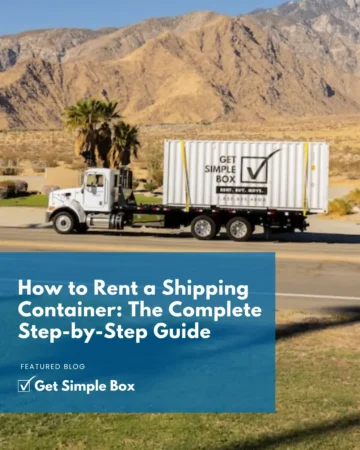
How to Rent a Shipping Container: Step-by-Step Guide
How to Rent a Shipping Container: A Step-by-Step Guide Quick Summary To rent a shipping container, pick your size (10ft,

Shipping Container Ventilation: Stop Condensation & Heat
Shipping Container Ventilation: How to Stop Condensation and Keep Your Belongings Dry A steel container keeps out rain, wind, and
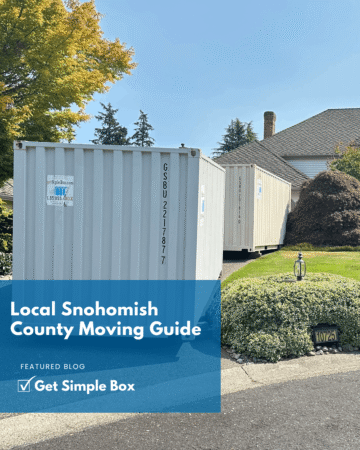
Moving with a Portable Storage Container in Snohomish, WA
Moving with a Portable Storage Container in Snohomish, WA Quick Summary: Moving with a portable storage container in Snohomish, WA
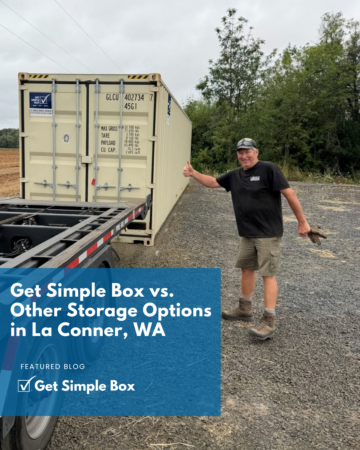
Get Simple Box vs PODS Burlington WA – Portable Storage
Get Simple Box vs. PODS Burlington WA | Storage Containers Quick Summary: Finding the right portable storage container in Burlington
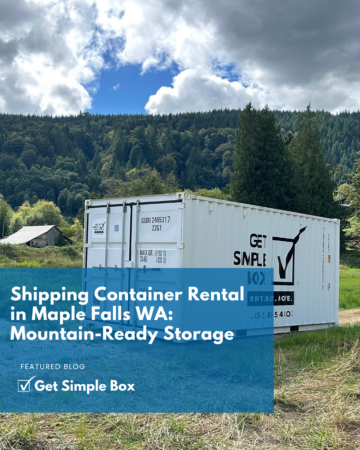
Shipping Container Rental Maple Falls WA – Get Simple Box
Shipping Container Rental in Maple Falls WA: Mountain-Ready Storage Finding the right shipping container rental in Maple Falls, WA comes
Storage Container Delivery Requirements & Site Prep Guide – Get Simple Box
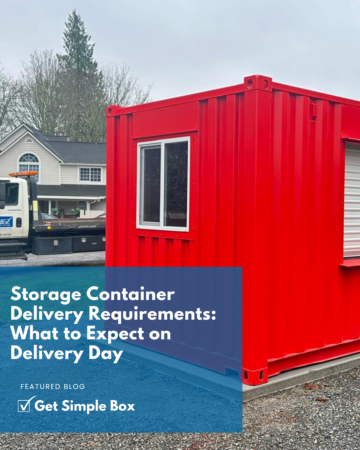
Storage Container Delivery Requirements: What to Expect on Delivery Day Quick Summary: Understanding key storage container delivery requirements is the