What to Expect on Delivery Day
You have done your homework, compared your options, and picked out the perfect container for your project. The hard part of choosing is over. But as delivery day gets closer, it is completely normal to look out at your property and feel nervous about the delivery process.
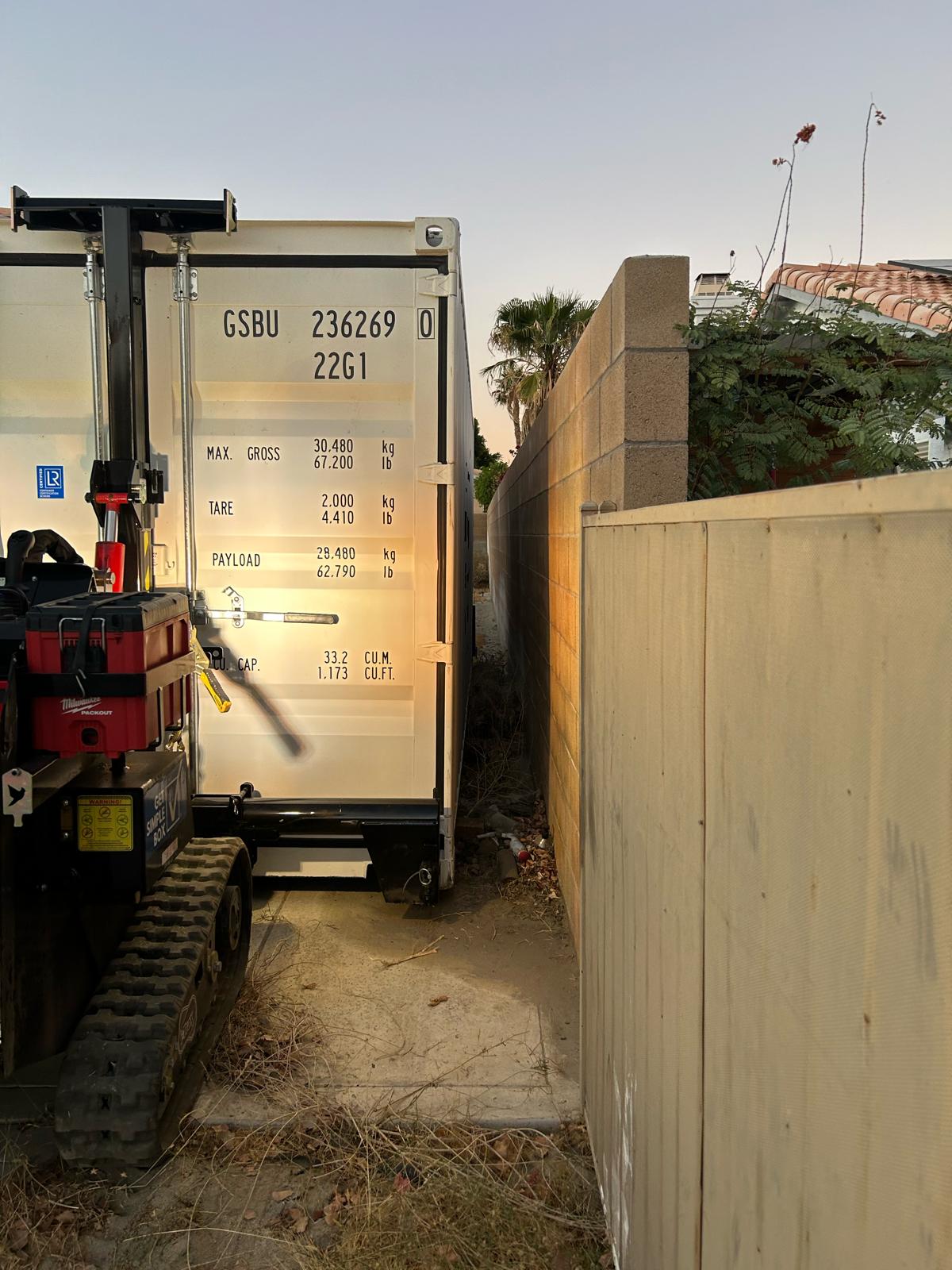
Let’s face it: watching a massive truck pull onto your property with a multi-ton steel 20 foot shipping container can be intimidating. If your site has a tight gate, a sharp turn, or a narrow gravel driveway, you are probably staring at that space wondering: Is this truck actually going to fit? Is it going to tear up my yard? What happens if my ground isn’t perfectly flat?
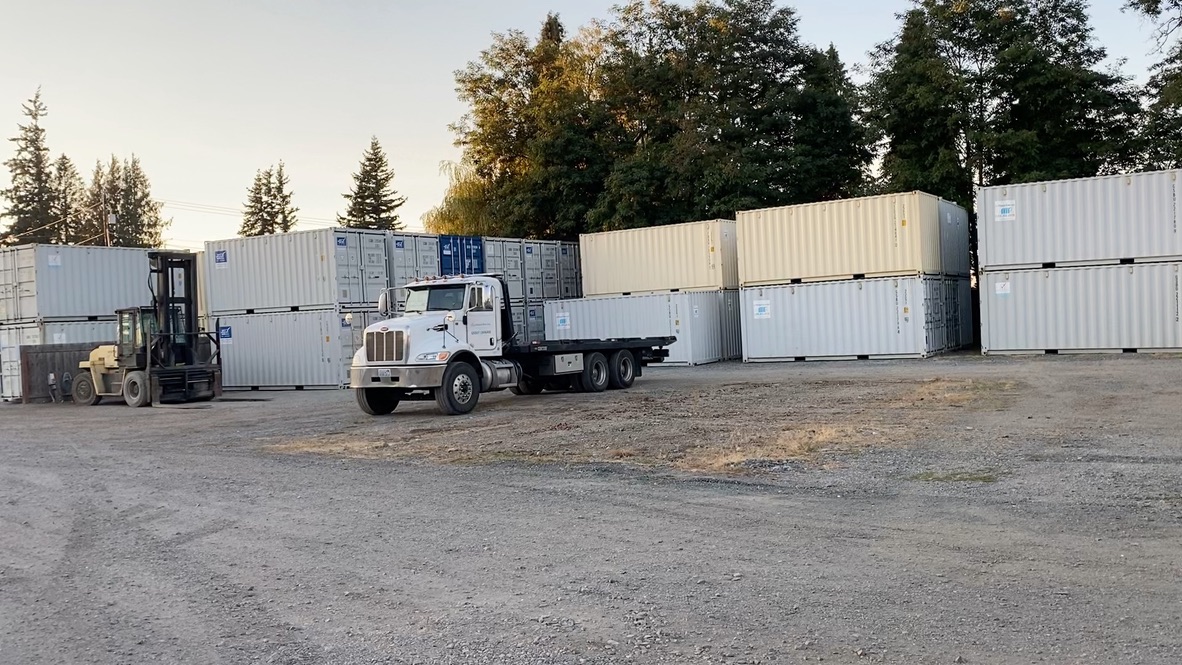
At Get Simple Box, we know that the final stretch of a shipping container delivery is usually what makes people the most nervous. Because we operate out of local yards, our drivers have seen just about every weird driveway and tricky property boundary in the area. We don’t expect you to have a perfect, wide-open commercial lot.
This guide is a practical look at exactly how our trucks move, how to prepare your specific ground, and what we can do to get your storage container rental perfectly placed, even if your location is tough to access.
Space and Clearance: The Math on Shipping Container Clearance
The biggest thing to understand about delivery day is that we need more room for the truck than we do for the actual conex box.
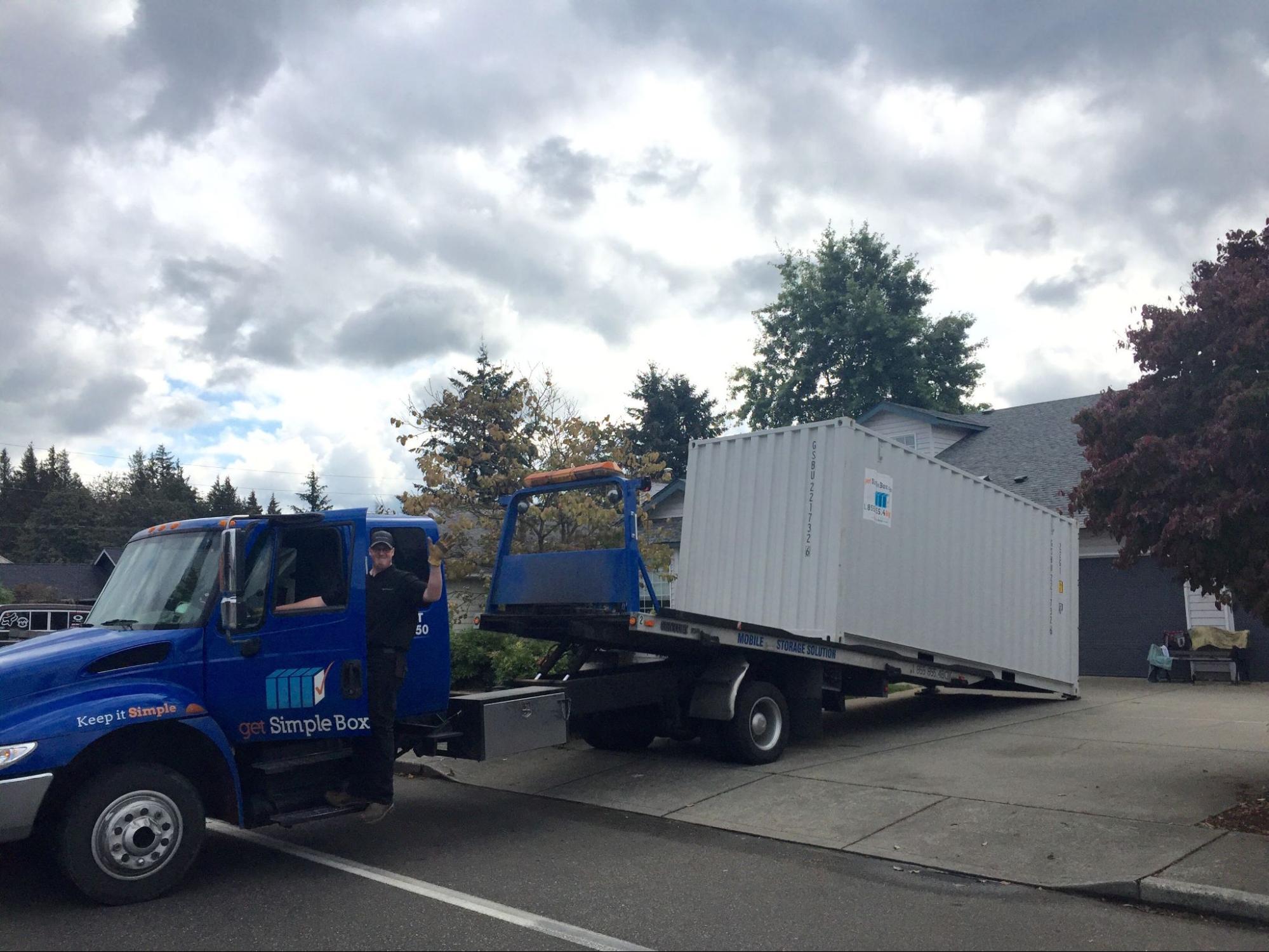
Our drivers use specialized tilt-bed trucks built specifically for this job. To place the container, the truck has to back into the spot, tilt the bed up, and slide the container off the rear as the truck pulls straight forward out from under it. Because the truck has to pull straight away, mapping out your shipping container clearance means ensuring you have a long, clear run of straight-line space.
Here is the actual space required based on standard shipping container sizes:
- For a 20ft container: The box itself is 20 feet long, but the truck needs about 70 feet of straight-line clearance to back in and pull forward safely.
- For a 40-foot container: You will need roughly 140 feet of straight-line clearance.
- Width and Overhead: The path needs to be at least 10 feet wide. Most importantly, look up, the truck needs 15 feet of overhead clearance to clear power lines, roof eaves, and tree branches while the bed is tilted up.
Ground Prep: Dealing with Grass, Gravel, and Slopes
You don’t need to pour a professional concrete pad to store your items safely. Your shipping container foundation can sit on asphalt, gravel, firm dirt, or even solid lawn. The main goal is keeping the box level.
If the ground slopes significantly or settles unevenly over time, the container can twist just enough to cause the heavy doors to bind up. Knowing your exact 20 foot shipping container dimensions ahead of time helps you select a spot that is naturally level.
How to use wood blocks to level the site
If you are placing your storage container rental on grass, gravel, or unpaved ground, we highly recommend keeping some pressure-treated wood blocks (like 4x4s or 2x6s) on hand.
When the driver arrives, they can slide these blocks under the corners of the container as it touches down. This accomplishes two things:
- It keeps the container perfectly level so the doors swing open easily.
- It elevates the box slightly off the ground, which protects your lawn, allows air to flow underneath, and keeps moisture from getting trapped.
Quick note on wet ground: If the path to your spot requires driving over soft grass or mud, give us a heads-up before the truck rolls out. Our trucks are heavy, and wet lawns or soft mud can quickly turn a smooth delivery into a messy situation. It’s always best to plan for a dry stretch or stick to harder ground.
What Happens When the Truck Arrives
We don’t want delivery day to feel chaotic. Our drivers are local pros who do this every day, and they follow a straightforward process to make sure you get exactly what you need.
- The Site Walk: When the driver pulls up, they won’t just blindly back into your yard. They will get out, look at the spot with you, check for low branches or hidden obstacles, and confirm which way you want the doors to face.
- The Controlled Slide: The driver will back into position, lift the tilt-bed, and slowly lower the back edge of the container to the ground. They will gently slide the unit into place without dropping it or shocking your property.
- The Door Check: Once the container is on the ground, the driver will open and close the cargo doors with you. If they stick or feel uneven, the driver will use shims or blocks to adjust the corners until the doors operate smoothly.
If you can’t be there in person, just make sure to leave a clear marker on the ground (like a cone, a bright stake, or a chalk mark) showing exactly where you want the back corners to sit.
A Quick 3-Point Inspection Before the Driver Leaves
Our yard team checks every container before it gets loaded, but we love it when customers do a final walk-through with our driver to ensure everything is perfect. Here are the three quick things to look at:
- The Light Test: Step inside the container and have the driver close the doors behind you for a quick second. Look up at the ceiling and along the walls. You shouldn’t see any pinholes of daylight. If it blocks out the light, it will keep out the weather.
- The Floor Check: Walk the length of the interior floor. It should feel completely flat, sturdy, and solid underfoot.
- The Gaskets: Take a quick look at the rubber seals around the doors. Make sure they are clean, intact, and ready to keep out wind and moisture.
Frequently Asked Questions About Storage Container Deliveries
The exterior dimensions of a standard 20ft container are 20’ Long x 8’ Wide x 8’6” High. The interior gives you 19’4” Long x 7’8” Wide x 7’10” High of usable storage space.
If the driver is placing the container on a straightforward asphalt driveway or a wide concrete pad, and you’ve marked the exact spot clearly, you don’t need to stay home. However, if the truck has to leave the pavement to navigate a gate, a field, or a tight backyard layout, we do require you to be there to help guide the driver safely.
A good rule of thumb is to measure out your desired spot and add an extra 3 to 4 feet of walking room around the sides so you can comfortably navigate around the box and swing the heavy doors all the way open.
Your Next Step: Simple Storage Delivered Right
You shouldn’t have to stress about the logistics of getting your container into place. Our small local teams handle every detail ahead of time, from our initial site intake form to the final on-site door check, so you can focus on your move or renovation.
If you have a unique property layout or want to verify if our trucks can navigate your driveway, give your local Get Simple Box team a call or text. We don’t do pushy sales pitches, just helpful, honest advice from neighbors who know the area.