
Moving with a Portable Storage Container: The Ultimate Guide to an Easy, Stress-Free Move
Navigating a major residential or commercial move can quickly descend into a chaotic race against the clock. Traditional moving methods, such as rushing to load a rented box truck over a single frantic weekend or handing your life’s possessions over to an expensive moving broker, frequently result in high stress, hidden fees, and broken items. At Get Simple Box, we believe that true efficiency comes down to maintaining control over your schedule and your budget. Choosing to tackle your next relocation by moving with a portable storage container completely flips the moving dynamic, replacing rigid weekend deadlines with flexible, ground-level logistics that work around your life.
Whether you are coordinating a local cross-town relocation or looking into reliable long-distance moving solutions, this comprehensive guide details how to plan your timeline, organize your packing, and maximize your financial savings.
Table of Contents
The Logistics of a Modern Move: Why Control Beats Chaos
The primary flaw of traditional moving is the structural pressure it places on your calendar. When you rent a traditional moving truck, you are forced to coordinate your packing, loading, driving, and unloading within a strict 24-to-48-hour window. This compressed timeline leads to rushed packing choices, physical exhaustion, and a higher probability of breaking valuable household goods.
Opting for a moving container rental introduces a buffer into your logistical pipeline. Instead of a ticking clock, you get a secure, weather-tight vault delivered directly to your driveway or property weeks ahead of your move.
- Pack on Your Terms: You can load the unit slowly, room by room, ensuring delicate items are wrapped and anchored correctly.
- Eliminate Double-Handling: If your new home isn’t completely ready, or if your closing date shifts unexpectedly, the container simply stays locked and secure at our yard until you give the word to drop it off at your new address.
- Zero Drive-Time Stress: You don’t have to navigate a massive, unfamiliar 26-foot box truck down tight residential avenues or busy highway corridors. Our professional drivers handle all transport logistics.
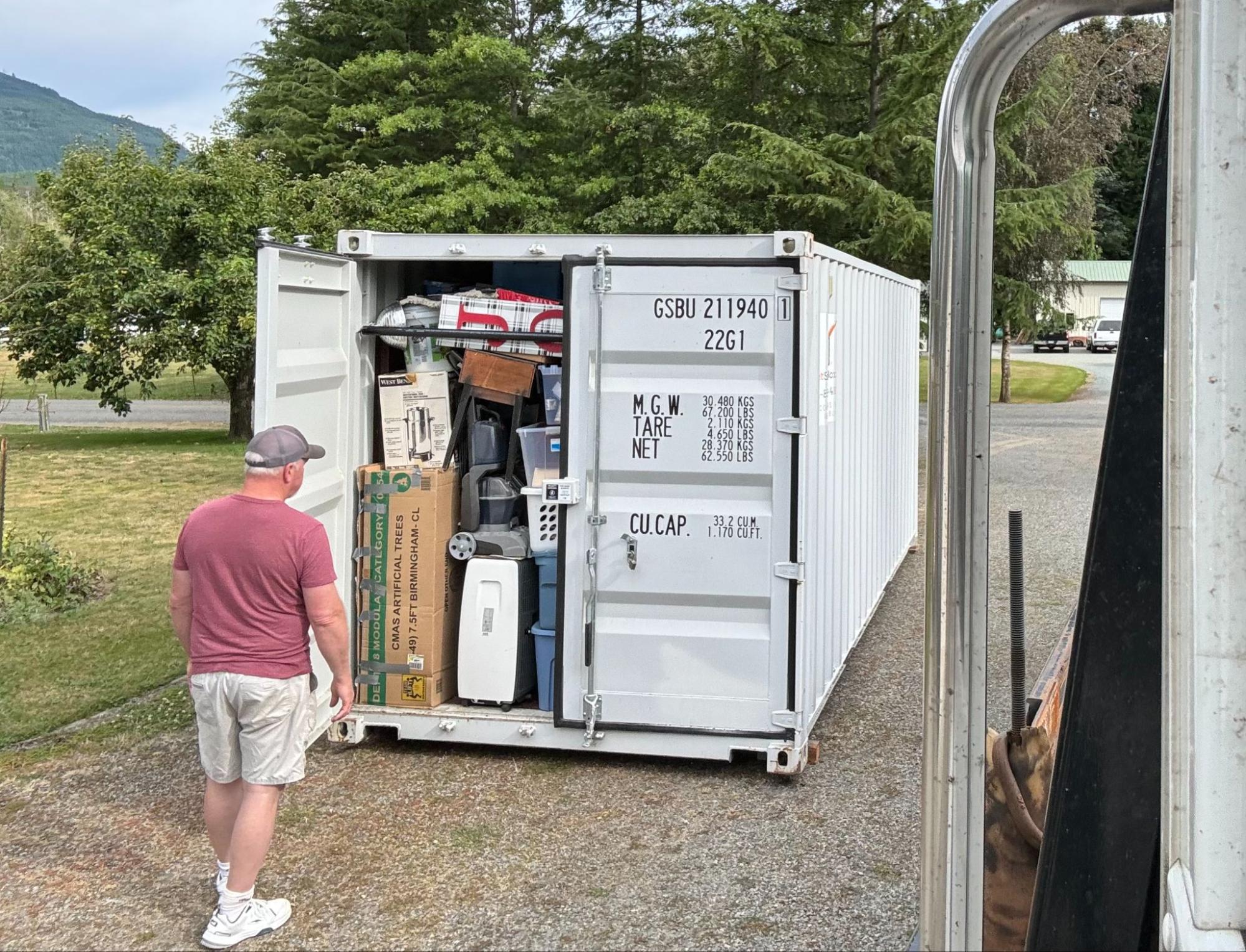
From the Yard: Eric’s Customer Story
We know that inviting a delivery truck onto your property requires a lot of trust. Shifting your schedule shouldn’t mean dealing with poor customer service or surprise fees at checkout. Local customer Eric recently used our container service for his move and shared how our team stepped up:
Whether you need a single unit or multiple portable moving containers to get the job done, our goal is to deliver total peace of mind with upfront pricing and precision placement.
Timeline Execution: The 6-Week Strategic Decoupling
A successful move doesn’t start on moving day; it is won or lost in the weeks leading up to it. Getting started early allows you to gather supplies, inventory your assets, and catch last-minute variables before they turn into emergencies.
Phase 1: The Six-Week De-Clutter (6 Weeks Out)
Before buying a single roll of tape, walk through every room, closet, and storage shed. Separate your belongings into three distinct categories: Keep, Donate, and Discard. Moving items you no longer use is a direct waste of labor and structural space.
Phase 2: Secure Your Mobile Infrastructure (4 Weeks Out)
Book your portable moving containers well ahead of your target date. Booking early avoids peak-season availability bottlenecks and allows our dispatch team to coordinate precise drop-off placement on your property.
Phase 3: Tier-2 Packing (2 Weeks Out)
Begin packing non-essential, out-of-season items first. This includes holiday decor, specialized tools, books, and formal dishware. Always source more heavy-duty boxes and structural packing tape than you anticipate needing.
Phase 4: The Final Transition (Moving Week)
With your daily essentials packed last, your container is ready for pick-up. Lock the cargo doors down with a heavy-duty puck lock, and notify our team to transition the vault to your new destination or store it securely at our yard.
The Financial Blueprint: Smart Estimates and Off-Season Savings
One of the most frequent questions our team members hear is: “How do I make sure I get the absolute best deal when moving?” Protecting your capital requires understanding market demand and pulling estimates from vetted, asset-based suppliers.
Never accept a blind, verbal quote from an online marketplace broker. Request comprehensive, itemized estimates that clearly outline delivery fees, monthly rental rates, and transit costs. Verify that any company you partner with is fully licensed, insured, and backed by authentic customer feedback on Google and Facebook.
Leverage Calendar Arbitrage (Moving Off-Season)
Roughly 60 percent of all residential moves in the United States occur during the compressed summer peak (May through August). This massive surge in demand drives up labor and equipment rates across the entire logistics industry.
Moving Window | Demand Level | Budget Impact | Strategic Advantage |
Peak Summer (May – Aug) | Extremely High | Premium Rates | Good weather for yard work and home transitions. |
Off-Season (Mid-Sept – April) | Moderate to Low | Baseline Pricing | Maximized equipment availability and flexible driver windows. |
Mid-Week (Mon – Wed) | Lower Fleet Utility | Potential Discounts | Avoids weekend bottlenecks; faster processing times. |
If your timeline allows for flexibility, scheduling your delivery window between mid-September and April instantly reduces your structural moving friction. Furthermore, picking a Monday, Tuesday, or Wednesday for container transit often opens up the most accommodating delivery slots.
Downsizing as a Budget Strategy: The Pre-Pack Purge
When it comes to physical transport, volume equals cost. Whether you are analyzing fuel surcharges or physical container footprints, having less cargo to move directly increases your bottom line savings.
Before you slide a single box into a 20ft container, execute an intentional pre-pack purge. View this as a prime opportunity to liquidate items that no longer serve a functional purpose in your lifestyle or business operations.
- The One-Year Rule: If an item has sat unused in a closet, garage, or warehouse corner for the past 12 months, do not spend time and money packing it. Donate it to a local non-profit or responsibly discard it.
- Digital Archiving: Minimize heavy storage crates by digitizing old tax records, paperwork, and media files.
- Fewer Boxes, Less Setup: Reducing your physical cargo footprint means you will require fewer packing supplies, less physical loading labor, and far less organizational stress when setting up your new space.
The Physics of Packing: How to Load a Moving Container Safely
To ensure your items survive transit without shifting or sustaining cosmetic damage, you must understand the basic physics of loading a steel vault. Unlike a stationary garage, a container experiences lateral and longitudinal forces during transport on our tilt-bed trucks.
Here is how to structurally pack a moving container like a professional logistics manager:
- Build a Solid Engineered Base: Always place your heaviest items, such as washers, dryers, refrigerators, and solid wood furniture, flat on the marine-grade plywood floorboard layer. Distribute this weight evenly across the footprint of the container rather than stacking all heavy items on one side.
- The Structural Tier Strategy: Stack upward from heaviest to lightest. Place dense cardboard boxes and tool crates on the bottom tier, medium-weight plastic storage totes in the middle layer, and fragile items, electronics, or soft linens on the very top.
- Eliminate Void Spaces: A tight load is a safe load. Fill any empty internal pockets between furniture legs or boxes with specialized moving blankets, heavy-duty packing paper, or soft couch cushions. If an item has room to slide, it will slide during transit.
- Utilize Integrated Tie-Down Points: Industrial shipping containers feature rugged D-rings and tie-down loops welded directly into the steel structural posts. Use heavy-duty ratchet straps or nylon ropes to tie off finished vertical sections as you pack your way toward the doors. This prevents the cargo from shifting forward when our truck tilts to pick up or set down the container.
Moving Pro Tip: The “Cardboard Mattress” Wall Technique
When you are loading a moving storage box, you will occasionally have to stop packing before the unit is completely full. To keep your half-loaded rooms from falling forward when our tilt-bed truck picks up the container, create a “structural wall.” Place a heavy appliance or mattress at the very front of your stack, and run a heavy-duty ratchet strap tightly across it using our built-in steel D-rings. This acts as a safety net, keeping your neatly stacked boxes perfectly in place during transit.

How Get Simple Box Compares to Other Moving Options
When you start looking into a moving container rental, names like PODS® or U-Haul often come up. While they all get your boxes from point A to point B, the way they do it, and what you get for your money, is completely different.
The chart below shows a side-by-side comparison of what it looks like to use a local, asset-based company versus national corporate chains:
Feature | Get Simple Box | National Container Chains (e.g., PODS®) | DIY Moving Trucks (e.g., U-Haul) |
Container Material | Heavy-duty, all-welded CORTEN steel | Aluminum, plastic, or wood paneling | Moving truck cargo box |
Ground-Level Packing | Yes (Safe, easy walk-in access) | Yes (Walk-in access) | No (Requires steep, dangerous ramps) |
Pack at Your Own Pace | Yes (Keep it for weeks if needed) | Yes (Keep it for weeks if needed) | No (Rigid 24–48 hour ticking clock) |
Who Drives the Vehicle? | Trained local professionals | Corporate fleet drivers | You (Must drive a massive, unfamiliar truck) |
Customer Support Model | Direct contact with your local yard | National call center queues | Local dealership desks |
Pricing Transparency | Straightforward, line-item quotes | Varied corporate pricing & fees | Hidden extras (mileage, gas, insurance) |
Frequently Asked Questions About Container Moving
How does the cost of a moving container compare to a rental truck or full-service movers?
A moving container rental is usually much cheaper than full-service movers because you handle the packing. While traditional box trucks seem cheaper upfront, they come with hidden extras like mileage fees, fuel costs, and strict deadlines. If your move dates change by even one day, a truck forces you to pay double to unpack into a storage unit and reload later. A portable container locks in a clear, flat monthly rate, saving you from surprise fees and the stress of a ticking clock.
Is it better to rent or buy a container for a home relocation?
Renting is highly cost-effective if you plan to pack, move, and unpack within a 1-to-6-month window. However, if you are moving to a rural ranch or commercial property and will require permanent, long-term tool staging or material storage after you arrive, purchasing a high-quality used or new container outright offers a much better long-term return on investment.
What size container do I need for a standard 3-bedroom house move?
Our standard 20ft container is the ideal go-to choice for a typical 2-to-3 bedroom home relocation. It holds roughly the same volume as a standard commercial moving truck but fits cleanly within a single driveway footprint. For larger estates, multi-family properties, or industrial facilities, stepping up to a 40foot shipping container provides the required bulk cubic capacity, provided your loading site features clear, straight-line clearance for our truck.
How do portable containers protect my furniture from weather damage during a move?
Unlike a traditional consumer rental truck or a soft-sided moving crate, our containers are engineered from heavy-duty CORTEN steel and feature fully continuous, professional welds. Combined with thick, industrial-grade EPDM rubber door gaskets, they form a completely weather-proof and pest-proof barrier that keeps driving wind, heavy rain, and local humidity entirely isolated away from your furniture and valuables.
Can I store the moving container at my own property indefinitely?
Yes, that is one of the premier benefits of moving with a portable storage container. There are no rigid deadlines. You can keep the container on your driveway, farm, or job site for as long as your project requires, loading or unloading it completely at your own pace. Always check your local municipal codes or HOA bylaws regarding temporary steel structures on residential driveways.
Secure Your Next Move with Get Simple Box
Transitioning to a new property shouldn’t feel like a high-stakes gamble against a ticking clock. Whether you need a flexible moving container rental to simplify a local family relocation or are analyzing portable moving containers to optimize a complex commercial job-site logistics puzzle, the team at Get Simple Box is here to streamline the entire process.
We manage our own private fleet of specialized tilt-bed delivery vehicles, utilize dedicated company drivers, and support your move with over two decades of verified local experience. We don’t deal in broker middlemen or hidden fees, just reliable, transparent support from real people who stand behind every box we deliver.
Ready to simplify your move? Contact the Get Simple Box team today to get real-time yard pricing, discuss your regional route logistics, and schedule your container drop-off window.
Related Posts:
Moving into Container Business Ownership: Why a Licensing Business Model Beats a Solo Startup
Moving into Container Business Ownership: Why a Licensing Business Model Beats a Solo Startup Starting a portable storage business through
June 2026 San Jacinto Container Price Index: Local Trends & What to Expect
June 2026 San Jacinto Container Price Index: Local Trends & What to Expect June 2026 retail container pricing in San
Container Price Index Report
Container Price Index Report Welcome to the inaugural Container Price Index (CPI) by Get Simple Box. Every month, we package

Understanding Shipping Container Grades in Marysville, WA: The Ultimate Buyer’s Guide
Understanding Shipping Container Grades in Marysville, WA: The Ultimate Buyer’s Guide Navigating the local market for an on-site storage solution

Understanding Shipping Container Grades in Quincy, WA: The Ultimate Buyer’s Guide
Understanding Shipping Container Grades in Quincy, WA: The Ultimate Buyer’s Guide Shopping for an on-site storage solution in Grant County

Preparing for Your Storage Container Rental in Sedro-Woolley: A Local Delivery Guide
What Makes a Storage Company Easy to Work With Sedro-Woolley is a town built on hard work and precision, from