If you ask someone about the biggest win in their business, they’ll often point to a major contract, a record sales month, or landing a large customer. But that’s actually not how most portable storage companies succeed.
Most members of the NPSA don’t have a Super Bowl at the end of the season. There isn’t one game, one customer, or one delivery that determines whether we’ve had a successful year. Instead, our businesses are built through thousands of ordinary moments that, taken together, define who we are.
Author Eugene Peterson described faithfulness as “a long obedience in the same direction.” I think that’s an excellent description of our industry. Whether it’s a quiet Tuesday in February or the busiest week of July, our customers expect the same thing: that we’ll show up, communicate well, and do what we promised.
Those ordinary moments look something like this:
None of these moments make headlines. But over time, they become our reputation.
That’s why the idea of winning every day resonates so deeply with me.
In Win Every Day, Mark Miller shares lessons gathered from elite football programs, Chick-fil-A leaders, military operators, and other high-performing organizations. While the settings are different from ours, the three principles translate remarkably well to portable storage:
Pursue Mastery. Own the Score. Help Others Win.
Those three disciplines provide a practical roadmap for building a business that succeeds not because of extraordinary moments, but because of extraordinary consistency.
The greatest threat to long-term success is not competition, it’s complacency. The moment we become satisfied with “good enough,” we stop improving.
Pursuing mastery means choosing to remain a student, regardless of how many years we’ve been in business. It means asking, How can we do this better? instead of defending why we’ve always done it this way. It requires humility—the willingness to admit there may be a better way, even if our current process has served us well.

The best portable storage operators I know are curious. They read. They ask questions. They visit other businesses. Some of the best ideas for our industry may never come from another container company.
Great leaders are lifetime learners. They borrow ideas, adapt them to their own organizations, and continue refining them over time.
Could you imagine tuning in to an NBA basketball game where they decided to not keep score? Both fans and players would lose interest quickly.
Every game worth watching has a scoreboard. Every winning business should too.
One of the simplest but most powerful ideas in Win Every Day is that people perform better when they know the score. Too often we ask people to “do a great job” without clearly defining what winning looks like.
Here are four of the numbers that we always pay attention to at Simple Box:
Your scorecard may look different, but the principle remains the same. Every person on the team should know what matters, understand how their role influences those numbers, and be able to see the score without waiting for the monthly meeting.
When the scoreboard is visible, ownership grows, and accountability becomes easier. Team members naturally begin encouraging one another because everyone is working toward the same result.
This may be the discipline that has the greatest impact on culture because it changes how we define success.
Too often we think in terms of individual performance. “I had a good day.” “I hit my numbers.” “My department is doing well.”
But that’s not how customers experience our businesses.
A portable storage company that is content with excellent drivers and horrible sales reps is not a great company. On the other hand, no amount of great customer service over the phone will make up for a bad delivery experience.
We don’t win independently. We win together.
Helping others win means looking beyond your own responsibilities and asking, “How can I make someone else’s job easier today?” To us, three daily activities show that we are committed to helping others win:
The strongest employees don’t ask, “Did I finish my to-do list?” They ask, “Did we win as a team today?”

What I appreciate most about this simple framework is its simplicity.
It doesn’t require a larger budget, new software, or the latest management trend. It requires a commitment to thousands of daily decisions.
We don’t build great portable storage companies through occasional moments of brilliance. We build them through consistent execution, day after day, season after season.
After all, the way we win any day is the way we win every day.
Before your next team meeting ends, consider discussing these three questions:
Pursue Mastery: Where have we become comfortable with “good enough?” What is one improvement we could make this month?
Own the Score: If I asked every person on our team what numbers define a successful day for the company, would they all give the same answer?
Help Others Win: What is one practical thing each of us can do this week to make someone else’s job easier?

Ross Black is the Steward & CEO of Get Simple Box and has spent nearly three decades in the portable storage industry. He is passionate about building healthy teams, creating simple systems, and helping businesses im
If you ask someone about the biggest win in their business, they’ll often point to a major contract, a record sales month, or landing a large customer. But that’s actually not how most portable storage companies succeed.
Most members of the NPSA don’t have a Super Bowl at the end of the season. There isn’t one game, one customer, or one delivery that determines whether we’ve had a successful year. Instead, our businesses are built through thousands of ordinary moments that, taken together, define who we are.
Author Eugene Peterson described faithfulness as “a long obedience in the same direction.” I think that’s an excellent description of our industry. Whether it’s a quiet Tuesday in February or the busiest week of July, our customers expect the same thing: that we’ll show up, communicate well, and do what we promised.
Those ordinary moments look something like this:
None of these moments make headlines. But over time, they become our reputation.
That’s why the idea of winning every day resonates so deeply with me.
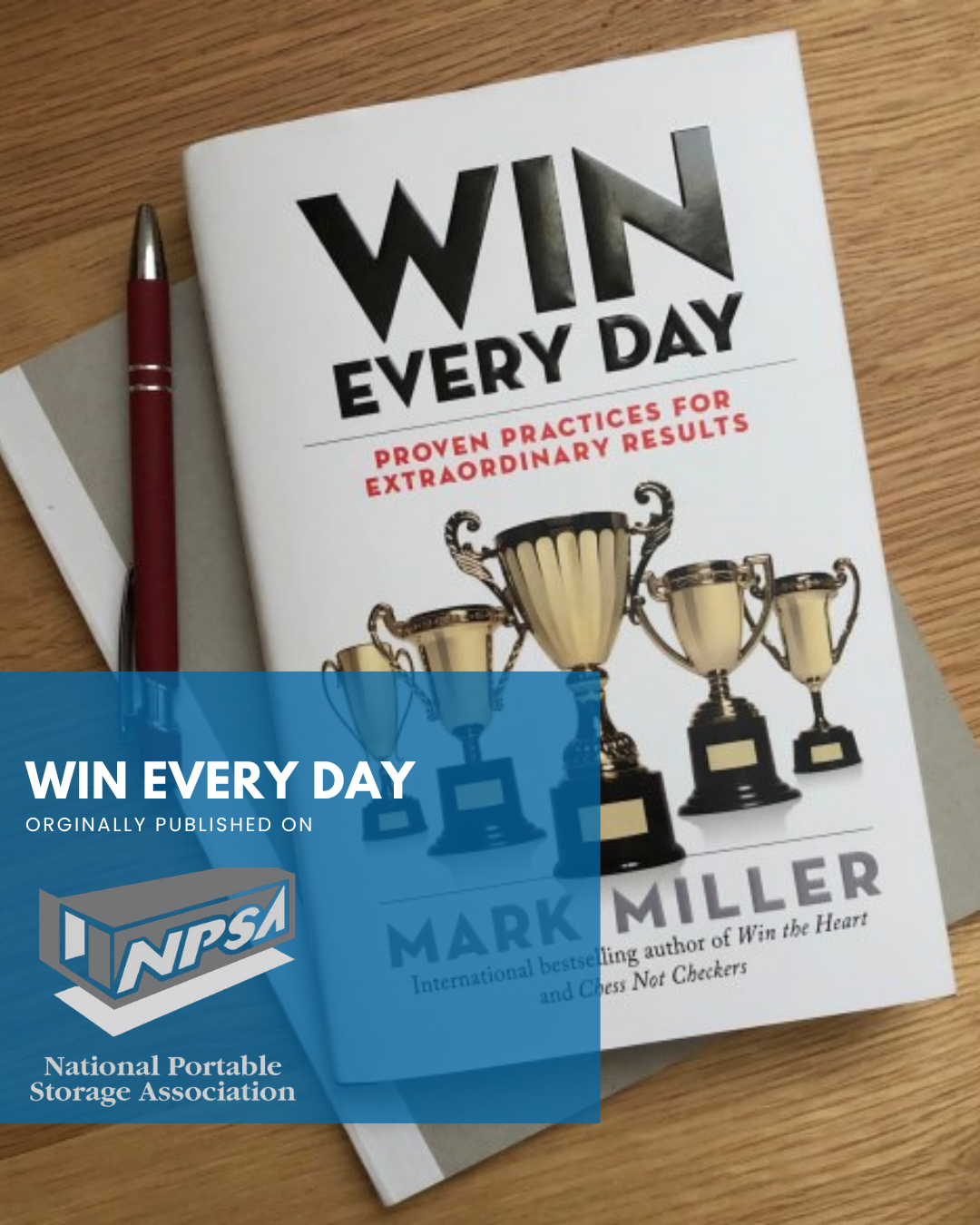
In Win Every Day, Mark Miller shares lessons gathered from elite football programs, Chick-fil-A leaders, military operators, and other high-performing organizations.
While the settings are different from ours, the three principles translate remarkably well to portable storage:
Those three disciplines provide a practical roadmap for building a business that succeeds not because of extraordinary moments, but because of extraordinary consistency.
The greatest threat to long-term success is not competition, it’s complacency. The moment we become satisfied with “good enough,” we stop improving.

Pursuing mastery means choosing to remain a student, regardless of how many years we’ve been in business. It means asking, How can we do this better? instead of defending why we’ve always done it this way.
It requires humility—the willingness to admit there may be a better way, even if our current process has served us well.
The best portable storage operators I know are curious. They read. They ask questions. They visit other businesses. Some of the best ideas for our industry may never come from another container company.
Great leaders are lifetime learners. They borrow ideas, adapt them to their own organizations, and continue refining them over time.
Could you imagine tuning in to an NBA basketball game where they decided to not keep score? Eighty fans and players would lose interest quickly.
Every game worth watching has a scoreboard. Every winning business should too.
One of the simplest but most powerful ideas in Win Every Day is that people perform better when they know the score. Too often we ask people to “do a great job” without clearly defining what winning looks like.
Here are four of the numbers that we always pay attention to at Simple Box:
Your scorecard may look different, but the principle remains the same. Every person on the team should know what matters, understand how their role influences those numbers, and be able to see the score without waiting for the monthly meeting.
When the scoreboard is visible, ownership grows, and accountability becomes easier. Team members naturally begin encouraging one another because everyone is working toward the same result.
This may be the discipline that has the greatest impact on culture because it changes how we define success.
Too often we think in terms of individual performance. “I had a good day.” “I hit my numbers.” “My department is doing well.”
But that’s not how customers experience our businesses.
A portable storage company that is content with excellent drivers and horrible sales reps is not a great company. On the other hand, no amount of great customer service over the phone will make up for a bad delivery experience.
Helping others win means looking beyond your own responsibilities and asking, “How can I make someone else’s job easier today?” To us, three daily activities show that we are committed to helping others win:
The strongest employees don’t ask, “Did I finish my to-do list?” They ask, “Did we win as a team today?”
What I appreciate most about this simple framework is its simplicity.
It doesn’t require a larger budget, new software, or the latest management trend. It requires a commitment to thousands of daily decisions.
We don’t build great portable storage companies through occasional moments of brilliance. We build them through consistent execution, day after day, season after season.
After all, the way we win any day is the way we win every day.
Before your next team meeting ends, consider discussing these three questions:
Pursue Mastery: Where have we become comfortable with “good enough”? What is one improvement we could make this month?
Own the Score: If I asked every person on our team what numbers define a successful day for the company, would they all give the same answer?
Help Others Win: What is one practical thing each of us can do this week to make someone else’s job easier?
Ross Black is the Steward & CEO of Get Simple Box and has spent nearly three decades in the portable storage industry. He is passionate about building healthy teams, creating simple systems, and helping businesses improve one day at a time.
This article was originally published in the NPSA (National Portable Storage Association) Magazine.