Top 14 Things to Look for in a Storage Company (It’s About People, Safety & Systems)
If you’re looking for a storage company, chances are you don’t just need more space, you need peace of mind. Whether you’re comparing mini storage, storage pods for rent, or a shipping container rental, the decision usually comes down to more than container price.
Most people assume all container suppliers are basically the same. They’re not. The right storage company will guide you through the process, protect what matters to you, and operate with systems that prevent surprises.
This guide breaks down what actually matters when choosing a storage company, especially if you’re considering container rental services, or even shipping containers for sale.
Table of Contents
What to Look for in a Storage Company (Quick Answer)
The best storage company gets three things right: people, safety, and systems. When even one of those is missing, small issues tend to turn into big headaches. Here’s what that actually means for you:
- People: You can talk to knowledgeable local experts who ask about your situation, not a call center reading a script. They help you choose the right storage container rental based on how you’ll actually use it.
- Safety: Your belongings are protected because the storage container itself is in good condition, not just labeled “wind and watertight,” but inspected, solid, and appropriate for long-term use.
- Systems: Pricing, delivery, and rental terms are explained clearly from day one, so there are no surprises when your plans change.
When a storage company gets these three things right, the experience feels simple and predictable. When they don’t, customers often end up frustrated, paying more than expected, or scrambling to switch providers mid-project.
The Storage Company Decision Most People Get Wrong
The most common mistake people make when choosing a storage company is focusing on the monthly price alone.
That’s understandable, especially when you’re comparing mini storage, storage pods for rent, or searching for container rental near me. But a low advertised rate doesn’t tell you how the experience will actually go. A cheap monthly rate doesn’t help if:
- delivery fees quietly double the total cost
- the storage container shows up in poor condition
- access is more limited than expected
- the company can’t support you when timelines shift
This is where many storage container rentals go sideways. The real differences between portable storage companies, container suppliers, and on-site storage options usually show up after you’ve signed, not before.
The customers who avoid problems down the road tend to look past the price tag and ask: What will this actually be like once the container is on my property? That question reveals far more than any promotional rate ever will.
The People Test: How You Know a Storage Company Will Actually Help You
The fastest way to spot a great storage company is to listen to the questions they ask. A helpful team doesn’t rush you into a storage container rental. They guide you through the process so you end up with the right fit the first time.
What a Helpful Storage Company Sounds Like
Rather than focusing only on budget, a customer‑first storage company wants context. They’ll ask questions like:
- What job are you working on? (a remodel, a move, business storage, a jobsite, a farm, an estate cleanout)
- What will you be using the storage container for day to day?
- How long do you expect to need it?
- Where will it be placed, your driveway, a jobsite, gravel, or a tight neighborhood street?
- Will you need to walk inside and access items while it’s on‑site?
These questions aren’t about slowing the process down. They’re about helping you avoid common mistakes, like choosing a container that’s too small, hard to access, or not suited for how often you’ll actually use it.
Guidance vs Upsell
Some container supplier teams lead with availability: “Here’s what we have right now.” Others take the time to explain trade‑offs so you can make a better decision. For example:
- If you’ll be in and out daily, a longer container with walkway space can make a big difference.
- If your timeline is uncertain, month‑to‑month container rentals can keep you flexible.
- If you’re planning permanent changes, buying a shipping container is the right path.
At Get Simple Box, the focus is on understanding what you’re trying to accomplish and matching you with the right container rental services, not just handing you “a container” and moving on.
Phone vs Call Center
When you search for “container rental near me,” you should be able to reach someone who knows the area you’re in.
Local experts can talk through things that matter in real life, like tight turns, narrow streets, sloped driveways, soft ground in winter, and where container placement usually works best. That kind of local knowledge makes delivery smoother and avoids last‑minute surprises.
Price Matching vs Fee Stacking
Another place people get tripped up is pricing. A quote that sounds great at first can fall apart once extra fees start showing up. A storage company with integrity is willing to walk through pricing clearly and answer questions like:
- Is delivery one price, or broken into multiple charges?
- Are there pickup or relocation fees?
- Are fuel or admin costs included?
- What happens if I end up needing the container longer than planned?
When a company is comfortable answering every question upfront, you’re far less likely to be surprised later, and far more likely to feel confident you chose the right storage partner.
The Safety Test: What Actually Protects Your Belongings
When people talk about safety in storage, they often think in terms of buzzwords. But real safety comes down to one simple outcome: your belongings stay dry, secure, and in good shape the entire time they’re in the storage container.
That’s why this part of the decision matters more than most people realize. Many storage companies rely heavily on the phrase “wind and watertight” to describe their containers, as if it’s a premium feature. In reality, it’s not.
“Wind and Watertight” Is the Bare Minimum
A container has to keep out wind and water just to be usable at all. So when you see WWT (wind/water tight), understand what it really means: baseline condition, not an upgrade.
If a storage company can only promise “wind and watertight” but can’t explain anything about the container’s overall condition, you’re being asked to take a leap of faith. And when you’re storing personal belongings, tools, inventory, or equipment, that’s a risky place to be.
Container Names and What They Mean
Part of the confusion comes from terminology. Containers go by several names, but they’re all referring to the same basic structure:
- Shipping container – the most common term, especially when buying
- Cargo container / ISO container – industry terms
- Conex or connex containers – a military term meaning the same thing
- Conex box or conex container – everyday language customers often use
Different name, same idea. What actually matters isn’t the name, it’s the condition of the container you’re getting.
Common Container Conditions (Grades)
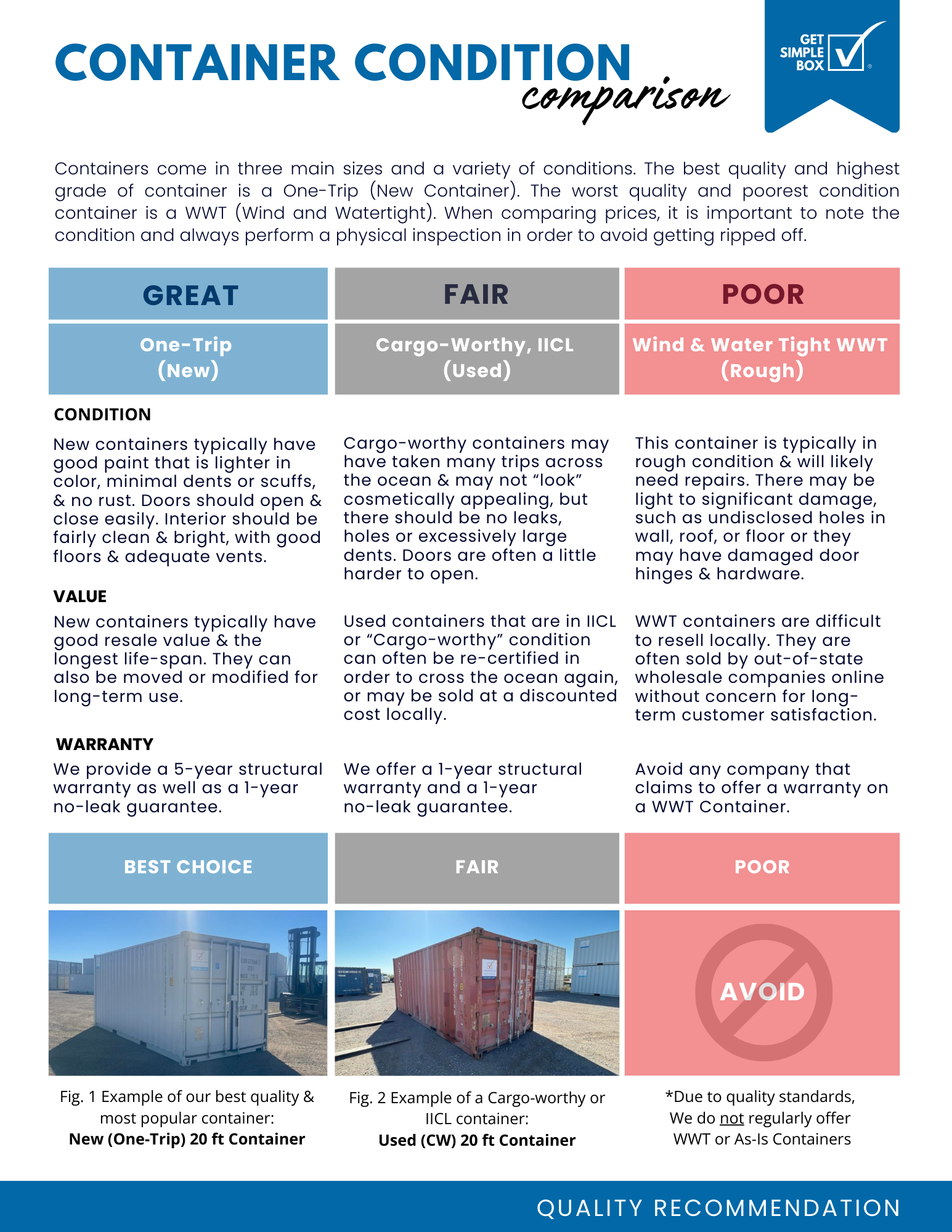
Not all containers are created equal, and a good container supplier should be willing to explain the differences clearly. You’ll typically hear containers described in these categories:
- One-Trip (New Container): Essentially new, made one trip across the sea
- IICL (Best Used Containers): High-quality used containers with strict inspection standards
- CW / Cargo Worthy: Structurally sound and approved for international shipping
- WWT / Wind and Watertight: Keeps out wind and water; baseline standard
- As-Is: Lowest grade, often sold with no guarantees; may have rust, dents, holes, floor wear, or other cosmetic and structural issues.
At Get Simple Box, the majority of our containers fall into the first three categories, One-Trip, IICL, and Cargo Worthy. That means our customers are getting containers that are newer, better maintained, and in noticeably better condition than what’s commonly offered by many storage and container companies, which often rely heavily on WWT or As-Is inventory.
A trustworthy storage company won’t just tell you what grade you’re getting, they’ll explain what that grade means for how you plan to use the container.
Why “WWT” Might Not Mean What You Think
Even when a container meets the WWT standard, there are still details that make a big difference over time. The most common problems don’t come from obvious holes, they come from wear and age.
Things worth paying attention to include:
- Door seals: Worn or brittle seals can slowly let moisture inside
- Roof condition: Old dents can create low spots where water pools
- Floor condition: Soft spots or damage can trap moisture and odors
- Ventilation: Temperature swings can cause condensation inside the container
This is why “wind and watertight” alone doesn’t guarantee a clean, dry interior, especially for long-term on-site storage.
Moisture Risk: The Issue Most Customers Don’t Expect
Most damage doesn’t happen because rain blows in. It happens gradually, from moisture building up inside the container over time.
A customer-focused storage company will help you reduce that risk by:
- placing the container on higher, well-draining ground
- recommending airflow instead of packing items tight to the walls
- Helping you choose a container size that allows a walkway and better air circulation, which, when paired with moisture-control solutions like DampRid®, helps reduce condensation and humidity buildup.
These small decisions make a big difference in keeping your belongings in good shape.
Access Control: What Actually Keeps a Container Secure
Security isn’t just about putting a lock on the door. It’s also about how the company operates behind the scenes.
Look for a storage company that provides:
- clear guidance on who can access the container
- recommendations on appropriate lock types
- consistent delivery and pickup processes, so you always know where your container is and when it moves
A good storage experience, whether you choose a shipping container rental, or alternatives like storage pods for rent, is more likely when a company views safety as the key to a dry, secure, and predictable outcome.
The Systems Test: Where Most Storage Companies Break Down
Even when a storage company has helpful people and decent containers, weak systems can still turn a simple storage need into a frustrating experience.
Most problems show up in three places: billing, delivery, and rental flexibility. When systems aren’t built around the customer, small issues tend to snowball.
Billing Confusion: When the Numbers Don’t Line Up
Customers are willing to pay for quality storage, what they don’t want to pay for are surprises.
Billing problems usually happen when quotes don’t include the full picture, delivery split into multiple charges, added admin fees, or costs that show up later. A well-run storage company makes pricing clear before anything is delivered.
At Get Simple Box, customers pay upfront for their first month’s rent, delivery and pickup fees, and any applicable taxes. This upfront pricing means you know exactly what you’re paying from the start. As long as access and scheduling go as planned, there are no hidden charges, no surprise fees, and no unexpected costs added later.
Delivery Surprises: Where Things Go Sideways
Poor delivery is one of the most common frustration points in storage container rental.
Issues often come from poor communication: access details not discussed, placement assumptions, or third-party drivers who aren’t fully looped into the plan or don’t know the area well. That’s why Get Simple Box keeps delivery in-house.
The same local team that talks with customers also works directly with the drivers. Delivery details, space, access, placement, are discussed ahead of time, so delivery day feels planned, not rushed.
Rental Rigidity: The Costliest Mistake
This is where customers often feel trapped. Real life doesn’t follow a perfect schedule. When a storage company has rigid rules, customers often end up paying more than expected or scrambling mid-project.
A flexible storage company offers:
- Month-to-month container rentals
- Simple one-month minimums
- Rent-to-own or buyout options where applicable
- Stable pricing without surprise increases
That flexibility matters whether you’re comparing mini storage, storage pods for rent, or searching for container rental near me.
The Simple System Check
Before you commit, you should get clear answers to a few basics:
- What’s the minimum term?
- Is it month-to-month after that?
- Do rates increase over time?
- Are ownership options available?
- What happens if I need it longer?
When those answers are straightforward, it’s a strong sign the storage company’s systems are built to support customers, not box them in.
The Five Questions You Should Ask Before You Rent or Buy a Container
Before committing to a storage container rental, it’s worth slowing down and asking a few practical questions. The answers don’t just clarify pricing or logistics, they show you how a storage company actually operates once the container is on-site.
These five questions consistently separate smooth, predictable experiences from frustrating ones.
1. Is this month-to-month, and is there a minimum rental period?
Flexibility matters more than most people expect. Month-to-month rentals give you room when timelines change, which they often do.
At Get Simple Box, rentals are month-to-month with a simple one-month minimum. If there is a minimum requirement, it’s always explained upfront. It’s also worth asking about promotions or discounts, many companies offer them, but they aren’t always advertised unless you ask.
Clear terms at the beginning make it much easier to adjust later without stress.
2. If I rent first, do I have a path to ownership?
Even if you plan to rent, it’s smart to ask about future ownership options.
Depending on the container and how it’s been used, Get Simple Box may offer rent-to-own programs or allow a container buyout on many containers down the road. Not every container qualifies, and that’s normal, but what matters is that the process is explained clearly so you understand what’s possible and what’s not.
That transparency gives customers flexibility if a temporary need turns into something more permanent.
3. How does delivery pricing and scheduling work?
Delivery is one of the most important questions to ask, and one of the easiest places for misunderstandings to happen.
Ask whether delivery is billed as a single, upfront cost or broken into multiple charges. At Get Simple Box, delivery and driver fees are included and billed upfront, so customers aren’t surprised by additional costs later (assuming everything goes smoothly and there’s no damage).
It’s also important to ask who actually handles delivery. Get Simple Box uses our own in-house, local drivers who work directly with the office team and the customer. That coordination helps ensure everyone is on the same page about placement, access, and expectations before delivery day arrives.
4. What happens if I need the container longer, or need it moved?
Very few projects run exactly as planned. That’s why it’s important to ask what happens if you need the container longer than expected. With Get Simple Box, rentals simply continue month-to-month, no penalties or forced renewals.
You should also ask whether the company can move a container once it’s loaded. Many storage companies aren’t equipped to do a loaded move safely. Get Simple Box has the equipment and experience to move loaded containers when needed, which can be a major advantage if plans change mid-project.
5. Who carries insurance on the container?
Finally, ask about insurance and responsibility. Who covers the container itself? What happens during delivery, pickup, or relocation?
Coverage should be explained clearly so customers understand where responsibility begins and ends. That clarity helps avoid confusion if something unexpected happens.
When a storage company can answer these questions clearly and comfortably, it’s a strong sign their systems are built around transparency, not fine print. By the time you’ve worked through these questions, you should feel confident you understand what you’re getting, how it works, and what to expect going forward.

Rent vs Buy a Container: How to Decide Without Guessing
Once you’ve asked the right questions, the rent-versus-buy decision becomes much clearer. Choosing between renting and buying a shipping container is really about making sure the option you’re considering fits how you’ll actually use the container and how much flexibility you want going forward. In practice, that decision usually comes down to three factors.
1. Modifications
This is the clearest line between renting and buying.
If you plan to make permanent changes, such as adding doors, windows, electrical, insulation, shelving, or climate control, you’ll need to own the container. Rented containers can’t be permanently modified, so ownership is required for any long-term customization.
If your needs are simple and don’t require changes to the container itself, a storage container rental can be a practical, low-commitment way to get the space you need without taking on ownership right away.
2. Duration
How long you expect to need the container is another key factor, but it doesn’t have to be exact.
Short-term needs, like a move, remodel, seasonal storage, or a temporary jobsite, often point toward storage container rental. Renting keeps things flexible when timelines are uncertain.
Longer-term or permanent use may make ownership more appealing, especially if the container becomes part of your daily workflow or property setup. In those cases, exploring shipping containers for sale can make sense once you’re confident about how the container will be used.
Many Get Simple Box customers start by renting, then transition to ownership later once their plans are clearer. That approach allows you to confirm size, placement, and access before making a bigger commitment.
3. Movement
Finally, think about how often the container might need to move.
If you expect the container to be relocated, across a property, to another jobsite, or to a new address, renting is often the better option. Rental containers are designed to be moved as needs change.
Ownership tends to make more sense when the container will stay in one place for the long haul. Once a container becomes part of a permanent setup, buying provides more control and opens the door to modifications and customization.
These three factors, modifications, duration, and movement, work together to guide the decision. There’s no single “right” answer for everyone, and the best choice is the one that matches how you’ll actually use the container.

Container Modifications: Why Ownership Changes Everything
Container modifications are where a shipping container really starts to work for you, not just store things for you. With the right changes, a container can become an office, workshop, jobsite hub, cabin, or long-term storage solution tailored to how you actually plan to use it.
But there’s one important rule that applies across the industry: permanent modifications are only possible when you own the container.
Why Ownership Is Required for Modifications
When you rent a container, it has to be returned in its original condition. That means cutting into the walls, adding windows or doors, installing electrical, or making other permanent changes simply isn’t allowed.
Ownership removes those limits. Once you own a shipping container, you have full control over how it’s customized and used. That flexibility is what unlocks the container’s full potential.
This is also why experienced container suppliers take time to explain ownership options early, so customers don’t plan around modifications that aren’t possible with a rental.
Common Shipping Container Modifications
Owned containers can be customized in many ways, depending on the job they need to do. Get Simple Box specializes in a wide range of modifications, including:
- Doors for easier access and improved functionality
- Windows, often with security mesh, to bring in natural light
- Interior framing to support finished walls or built-ins
- Insulation for temperature control and comfort
- Electrical, including lighting, outlets, and single-circuit systems
- HVAC and climate control, such as mini-split systems
- Flooring upgrades for durability and daily use
- Vents to improve airflow and reduce moisture
- Cut and fabrication work for fully custom layouts
These modifications allow containers to be transformed into offices, cabins, tiny homes, workshops, or purpose-built storage spaces.
Designing a Container That Fits Your Needs
The best container modifications start with understanding how the space will be used. Whether mobility, durability, comfort, or budget is the priority, a thoughtful design process helps ensure the container works well from day one.
At Get Simple Box, the focus is on practical, cost-effective solutions that fit real-world needs. Modifications are designed with long-term use in mind, balancing function, durability, and simplicity.
If customization is part of your plan, owning the container gives you the freedom to build something that truly fits your project instead of working around limitations.
Container Sizes: Why “Enough Space” Is Usually the Wrong Goal
Most customers underestimate how much space they need, not because they miscalculate volume, but because they underestimate how they’ll actually use the container day to day.
When people think about size, they often focus on fitting everything inside. What they don’t always think about is access, how often they’ll need to get in and out, move items around, or find something without unloading half the container first. That’s where size decisions start to break down.
Access vs. Volume: Why Walking Room Matters
In real-world use, walking space is often more valuable than raw square footage.
A container that’s packed wall-to-wall might technically hold everything, but it can quickly become frustrating if you need regular access. Narrow aisles, stacked items, and tight clearances turn simple tasks into time-consuming ones.
Larger containers reduce that daily friction. Extra length gives you room to create a walkway, organize items by use, and access what you need without constant reshuffling. For most customers, that usability matters more than squeezing into the smallest possible footprint.
Understanding Standard Shipping Container Sizes
Most shipping containers in North America follow standard ISO dimensions. They’re typically 8 feet wide, about 8 feet 6 inches tall, and come in common lengths like 20 feet and 40 feet.
- 20-foot containers are the most popular option for renting. They’re easier to deliver, fit in more locations, and work well for moves, remodels, and jobsite storage.
- 40-foot containers are often chosen when buying, especially for long-term or permanent use. They offer more space per square foot and are commonly seen in ports, depots, and container yards.
There are also smaller and specialty options, like 10-foot containers or high-cube containers with extra height, but the key is matching the size to how you’ll actually use the space, not just how much you can fit inside.
Container Size Examples: Why Bigger Often Works Better
Get Simple Box offers container sizes that are approximately 33% larger than many standard competitor options, which gives customers more usable space, not just more room to pack things tightly. Common sizes include:
That extra length makes a noticeable difference. It allows for better organization, safer stacking, and easier access, especially for customers who need to walk into the container regularly.
In practice, choosing a slightly larger container often saves time, frustration, and reloading later. Instead of aiming for “just enough,” it’s usually smarter to choose a size that gives you room to work comfortably inside the container.
Delivery Is Where Good Storage Companies Prove Themselves
Delivery isn’t just a drop-off. It’s often the moment when a storage company either earns your trust, or loses it.
On paper, container delivery sounds simple. In reality, it’s one of the most technical parts of the entire process. Placement, clearance, ground conditions, and access all matter, and small mistakes can turn into big problems once the container arrives.
That’s why experienced storage companies treat delivery as a skill, not an afterthought.
Why Delivery Experience Matters
A professional storage company relies on trained, local drivers who understand how containers behave in real-world settings. Residential driveways, job sites, commercial lots, and rural properties all present different challenges.
Knowing how much space is needed, how to approach the site, and how to position the container correctly the first time saves time and prevents damage, to the container, the property, and the customer’s belongings.
How Get Simple Box Approaches Delivery
At Get Simple Box, delivery is handled by an in-house, local team that works closely with office staff and customers to plan each delivery. The goal is simple: no surprises on delivery day.
Containers are delivered using specialized tilt-bed trucks, which allow for safe, controlled placement on a wide range of sites. This delivery method provides precision, helping ensure the container ends up exactly where it’s needed, whether that’s a residential driveway, a commercial property, or a construction site.
Before delivery, the team talks through access, space requirements, ground conditions, and placement preferences. That preparation helps ensure the container arrives on schedule, in good condition, and ready for use.
Fair Pricing and Clear Expectations
Delivery is also one of the most common areas where customers experience unexpected costs.
Clear delivery pricing upfront, combined with careful planning, helps avoid last-minute fees or rushed decisions. When expectations are set ahead of time, how the container will be delivered, where it will be placed, and what the total cost includes, the entire process feels smoother and more predictable.
In the end, delivery is where strong container rental services separate themselves from frustrating ones. When it’s done right, the container shows up when expected, goes where it’s supposed to, and works the way you need it to from day one.
Get Simple Box vs Other Storage Companies: What Actually Matters
When people compare storage options, they’re often looking at a mix of mini storage, portable storage companies, and container suppliers. On the surface, many of these options can look similar. The real differences tend to show up later, once the container is delivered, billed, and used day to day.
That’s why outcomes matter more than marketing claims. Predictability, space, control, and trust are what ultimately shape the experience.
A Practical Comparison: What You’re Really Choosing Between
Here’s how Get Simple Box typically compares to other common storage options customers consider:
Feature | PODS® / U-Box® | Mobile Mini / Pac-Rat | Traditional Mini Storage | |
Local experts | Yes | Call center–based | Regional / mixed | On-site staff only |
Delivery handled by | In-house, local drivers | Third-party or scheduled fleet | Mixed | Customer transports |
Container size | ~33% larger options | Standard pod sizes | Standard ISO sizes | Fixed unit sizes |
On-site storage | Yes | Yes | Yes | No |
Pricing clarity | Transparent, upfront | Often layered | Varies by market | Monthly + fees |
Rental flexibility | Month-to-month, rent-to-own, buyout where applicable | Limited | Limited | Contract-based |
Ability to move loaded containers | Yes | Often limited | Varies | Not applicable |
Modification options | Yes (owned containers) | No | Limited | No |
Each of these options works for certain situations. Mini storage can be convenient if you don’t need on-site access. Portable storage pods can work for short moves. Larger container suppliers often serve big commercial jobs.
What sets Get Simple Box apart is how consistently the experience is designed around real-world use, not just logistics.
Why These Differences Matter in Practice
Customers often choose Get Simple Box because they want:
- Local expertise, not a call center
- Delivery handled by people who know the area, not a rotating third party
- More usable space, not just the minimum required
- Clear pricing, with no surprises after delivery
- Flexible options, including the ability to adapt if plans change
Instead of forcing customers into a rigid system, Get Simple Box is built to support how people actually use storage containers, whether that’s for a move, a remodel, a jobsite, or a long-term project.
At the end of the day, the right storage company isn’t the one with the loudest marketing. It’s the one that delivers predictability, control, and confidence from the first conversation through pickup or ownership.
Real Customer Stories: Why People Switch Storage Companies
Many customers don’t start out looking for a new storage company. They start out trying to make the one they chose work.
Most switching stories follow a similar pattern: expectations were set one way, but the experience turned out very differently once the container was delivered and the rental began. Common reasons people switch include:
- Unexpected delivery fees that weren’t clearly explained upfront
- Smaller containers than expected, making access and organization difficult
- Limited access or rigid rental terms that don’t adapt when plans change
In almost every case, the frustration isn’t just about cost or logistics, it’s about trust. People feel stuck when the reality doesn’t match what they were told. That’s often when customers find Get Simple Box.
Instead of trying to undo a bad experience, Get Simple Box focuses on resetting expectations and providing clarity from the start. Customers frequently mention how much of a difference it makes to speak with a local team that listens, explains options, and follows through.
One recent customer shared this after switching during a stressful time:
Stories like this aren’t about finding the cheapest option. They’re about finding a storage company that shows up when it matters, communicates clearly, and makes an already difficult situation feel manageable.
Clear communication, predictable systems, and local support are what customers consistently say they value most after switching. And for many, that difference is what turns a one-time rental into a long-term recommendation.
FAQ: Choosing a Storage Company
How long can I keep a storage container?
Most Get Simple Box rentals are month-to-month with a simple one-month minimum, making it easy to keep the container as long, or as short, as you need.
Are shipping containers actually weatherproof?
A container must be wind and watertight to be usable, but overall condition matters more. Door seals, flooring, ventilation, and container age all affect how well contents stay protected over time.
Can I modify a rented storage container?
No. Permanent modifications like doors, windows, electrical, or insulation require ownership. Rented containers must be returned in their original condition.
What size storage container do I need?
Most customers choose between 8×10, 8×20, or 8×40 containers. Choosing slightly larger than you think you need usually improves access, organization, and daily usability.
Is on-site storage secure?
Security depends on container condition, proper locking, and controlled access. Placement and delivery also play a role in overall security.
Can a storage company move my container after it’s loaded?
Not all companies can. It’s important to ask upfront whether a company is equipped to safely move a loaded container if plans change.
What’s the difference between mini storage and on-site storage containers?
Mini storage requires transporting your items off-site, while on-site storage keeps your belongings where you need them, with easier access and fewer trips.
Final Checklist: What to Look for in a Storage Company
Before you commit, make sure the storage company checks these boxes:
- Helpful, knowledgeable people who ask the right questions
- Storage containers in good condition, not just labeled “wind and watertight”
- Clear pricing and delivery terms explained upfront
- Flexible rental and ownership options
- Proven local experience with real customer reviews
If you’re searching for container rental near me in the Mid-Willamette Valley, Salem, Keizer, Silverton, Stayton, Mt. Angel; North Valley, Woodburn, Dayton, McMinnville, Get Simple Box offers local expertise, predictable systems, and containers that are ready when you need them.
Ready to Find the Right Container?
Whether you need short-term storage, long-term space, or a container you can customize and keep, Get Simple Box helps you choose the right fit, without surprises.
Talk with a local expert, get clear pricing, and explore your container options today.
Related Posts

Shipping Container Ventilation: How to Stop Condensation and Keep Your Belongings Dry A steel container keeps out rain, wind, and
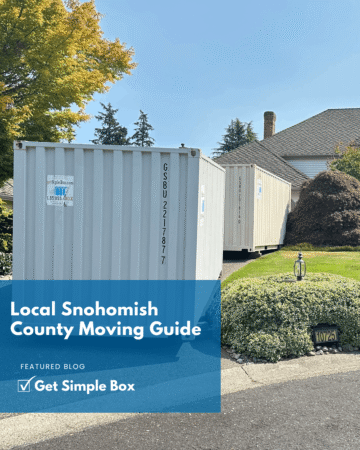
Moving with a Portable Storage Container in Snohomish, WA Quick Summary: Moving with a portable storage container in Snohomish, WA
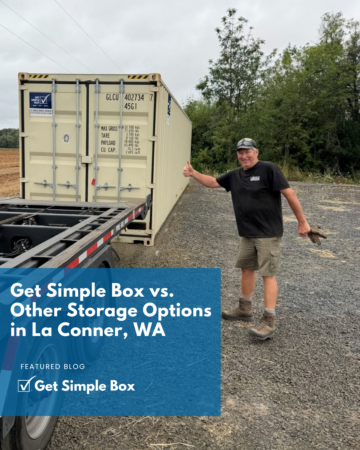
Get Simple Box vs. PODS Burlington WA | Storage Containers Quick Summary: Finding the right portable storage container in Burlington
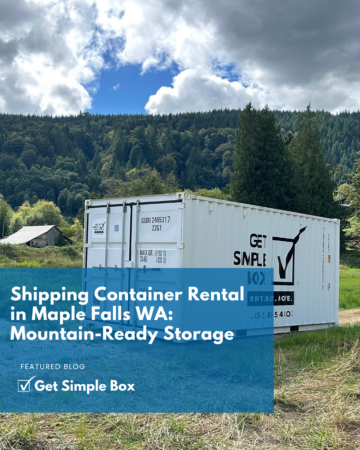
Shipping Container Rental in Maple Falls WA: Mountain-Ready Storage Finding the right shipping container rental in Maple Falls, WA comes
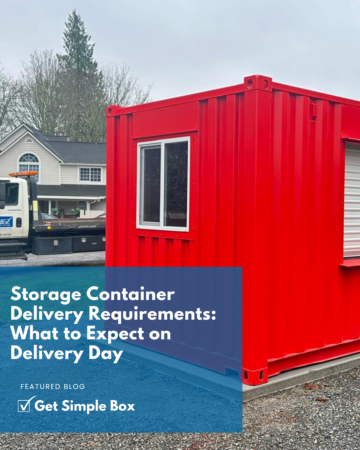
Storage Container Delivery Requirements: What to Expect on Delivery Day Quick Summary: Understanding key storage container delivery requirements is the
Portable Storage Containers in Palm Springs CA: Get Simple Box vs. PODS®, Aztec Containers & WillScot (Mobile Mini®) Finding the