Keeping Your Cool: How to Protect Your Storage Container in Dallas, OR This Summer
We’ve all been there: you park your truck at the Dallas City Park for a few hours, and when you return, the steering wheel is too hot to touch and the air inside is stifling.
In the heart of the Willamette Valley, your storage container acts exactly like that car. Because they are built from heavy-duty steel, they conduct heat with incredible efficiency. Whether you’re storing equipment for your vineyard, supplies for a local manufacturing plant, or furniture for a move near LaCreole Middle School, your items shouldn’t have to suffer through the “oven effect.”
At Get Simple Box, we aren’t just a faceless retailer. Operating from our local Salem yard, we are your guides to keeping your belongings safe during a scorching Oregon summer. Here is how you can protect your investment.
Local Success Story: Real Results in the Valley
“Get Simple Box is a fantastic, family-owned company in Salem… They were very friendly, responsive, and informative, helped us select the right container for our needs at a great price right there on their lot, and delivered it a short time later into a challenging location on our property with extraordinary skill and professionalism. I’d give ten stars if I could. Thanks again Trevor, Natalia, & Co.!” — Jeremy (Local Google Review)
Why Do Storage Containers Get So Hot in the Oregon Sun?
Think about wearing a black t-shirt during the Polk County Fair in August. You’ll feel significantly hotter than if you wore a white one because dark colors absorb the sun’s rays.
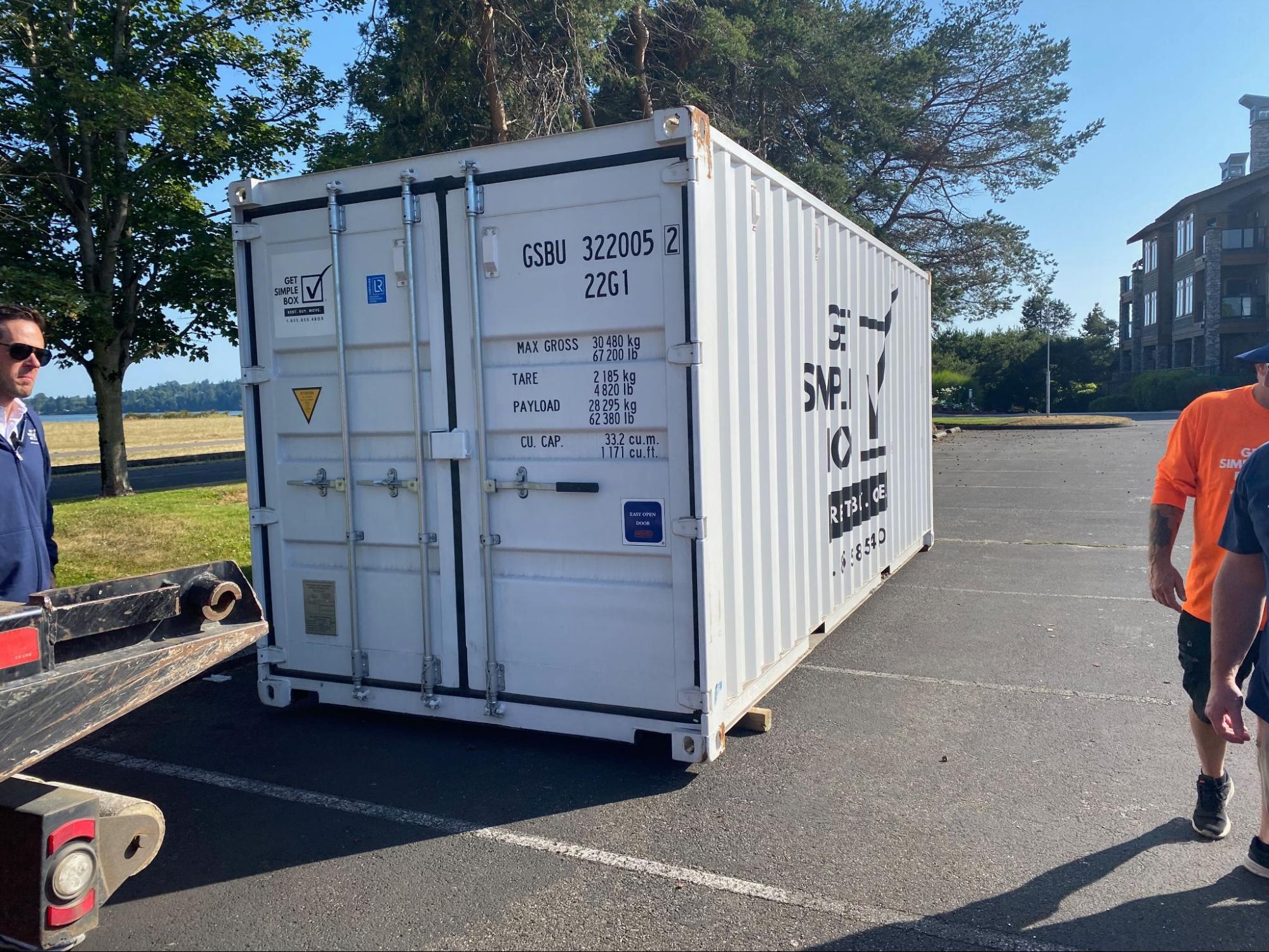
Most shipping containers for sale in Dallas come in industrial colors like deep blue, forest green, or rust red. These dark tones “soak up” the valley sun, pushing internal temperatures well past 100°F. If you own your unit, one of the most effective local DIY tips is to paint the roof white or light gray. Using a reflective “cool roof” paint can repel the sun’s rays rather than absorbing them, significantly lowering the internal temperature of your 20-foot container in Dallas, OR.
Where is the Best Place to Put a Shipping Container Rental in Dallas, OR?
Placement is the foundation of a cool container. If you leave a steel unit on an unshaded asphalt pad, it creates a thermal trap, baking your inventory from both the top and the bottom simultaneously.
- Find the True North Shade: Position your unit under a mature tree canopy or directly on the north side of a larger structure like a barn, commercial warehouse, or residential garage. In the Willamette Valley, the summer sun strikes hardest from the south and west during the peak heat hours. Blocking these specific angles keeps the steel skin from absorbing radiant energy.
- The Ground Surface Matters: Avoid placing your storage container directly on bare asphalt or dense crushed gravel. These surfaces act as thermal batteries, storing heat all day and radiating it straight up into the steel floor of your unit. Instead, set the container on 6-inch pressure-treated wood blocks (4×4 or 6×6 dunnage blocks) under the corners. This elevates the unit, breaking the thermal bridge with the ground and allowing a continuous stream of cool air to circulate underneath the floorboards.
Dallas Pro-Tip:
Dallas sits in a unique geographic pocket where the valley floor meets the foothills. As the sun sets, cool air drops out of the Coast Range and moves eastward toward downtown. If your property is located in the higher-elevation neighborhoods near Ellendale Avenue, out toward Fern Corner, or along the foothills near Kings Valley Highway (Hwy 223), you can weaponize this geography. When our drivers from the Salem yard drop off your unit, have them align the cargo doors or your installed ventilation systems toward the West/Northwest. This perfectly intercepts that evening mountain breeze, flushing out the hot, stagnant daytime air automatically.
How Can I Improve Airflow and Ventilation Inside My Unit?
If you have a 40-foot shipping container in Dallas, trapped air becomes your biggest enemy. Without movement, humidity settles, and heat builds up. Steel containers are entirely airtight by design, meaning any heat that penetrates the walls stays locked inside, multiplying daytime temperatures.
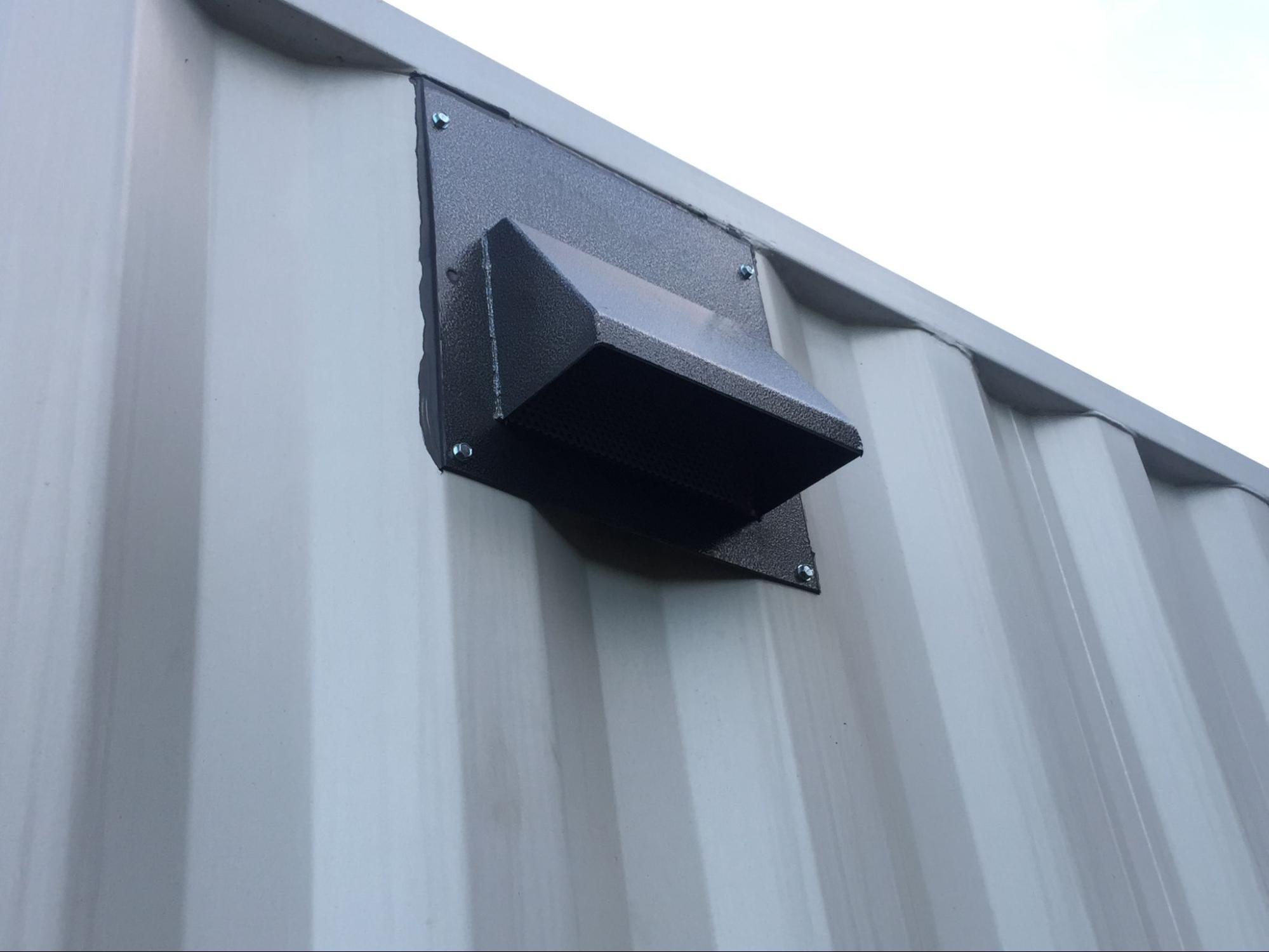
- The “Cross-Ventilation” Strategy: We recommend adding low-profile louvered vents or wind-driven turbine vents at both ends of the container. By placing one vent high on one side and another low on the opposite end, you create a natural pressure differential. This consistently pulls the rising hot air out of the top while drawing cooler air in through the bottom.
- The Morning Reset: Here’s a pro tip for Dallas residents: Open your container doors for a few minutes in the early morning. This “purges” the warm, humid air from the previous day and replaces it with the cool, crisp valley morning air before the afternoon heat hits. If your property is located down in the lower-elevation areas near Rickreall Creek or out toward Independence and the Willamette River, you get a much heavier morning dew point. Purging this trapped night air around 7:00 AM prevents that early moisture from baking under the 2:00 PM sun.
What are the Best Ways to Prevent Humidity and Moisture Damage?
In Dallas, it’s not just the heat, it’s the humidity. When warm air hits the cool metal walls at night, it creates condensation (also known as “container rain”). Because our valley weather swings from hot days to crisp, damp nights, the steel walls will literally “sweat” on the inside, dripping directly onto your goods.
- Stack for Success: Don’t pack your items wall-to-wall. Leave a 3-inch gap between your boxes and the container walls. This creates a perimeter chimney effect, allowing air to flow freely up the sides of the container rather than getting trapped against your furniture or inventory.
- Elevate Your Items: Always use clean pallets or heavy-duty plastic shelving units to keep your items off the steel floor. If you are setting up your container near the agricultural fields off Hwy 223 (Kings Valley Highway), ground moisture can migrate upward underneath the container. Keeping your boxes elevated ensures that even if minor condensation pools on the floor, your valuables remain bone-dry.
- Moisture Absorbers: For an inexpensive fix, placing open bags of cat litter or calcium chloride-based products like DampRid at either end of the unit can help manage the humidity levels during those muggy July weeks. For high-volume storage, hanging moisture poles (desiccant bags designed for ocean transit) along the internal D-rings of the container provides weeks of continuous protection without taking up valuable floor space.
Sometimes, a standard box isn’t enough for sensitive Dallas industries like winemaking or electronics manufacturing. At Get Simple Box, we specialize in professional modifications. If your project requires a stable environment, we can provide:
- Spray Foam Insulation: This provides a seamless thermal barrier, much like the insulation in your own home.
- Full HVAC/AC Units: We can modify your owned shipping container to include electrical hookups and through-wall AC units to keep your temperature-sensitive inventory at a perfect 70°F year-round.
Fast Delivery Across Polk, Marion, & Yamhill Counties
Our Salem yard serves as the central hub for the entire Willamette Valley. By leveraging local routes along I-5 and Hwy 22, we keep delivery costs predictable and scheduling flexible. Whether you need a 20-foot container in Dallas, OR for a farm or a 40-foot shipping container in Dallas for a commercial job site, we get it there on time.
Regional Zone | Key Cities & Communities | Primary Routes | Typical Environment |
Polk County | Dallas, Independence, Monmouth, Rickreall | OR-22, OR-99W | Vineyard access, suburban & rural projects |
Marion County | Salem, Keizer, Woodburn, Stayton | I-5, OR-22, OR-99E | Residential, state facilities, & commercial |
Yamhill County | McMinnville, Newberg, Amity | OR-99W, OR-18 | Wine country & farm equipment storage |
Linn County | Albany, Lebanon, Mill City | I-5 S, US-20 | Timber sites & highway-adjacent h |
Dallas Summer Storage FAQs
On a typical 90°F day in the Willamette Valley, a dark-colored steel container sitting in direct sun can easily reach internal temperatures of 120°F to 130°F. Because industrial steel conducts and traps radiant heat so efficiently, the air inside creates a greenhouse effect that stays hot long after the sun goes down, making proactive temperature management essential.
Yes, it is absolutely worth it for the secure square footage, but you must prioritize a few simple modifications. If you cannot place the unit out of the sun, you should budget for a reflective elastomeric roof coating to bounce the heat away and install mechanical or turbine ventilation to ensure a continuous air exchange that protects your belongings from heat damage.
Can I just store my stuff in a standard shipping container during a Dallas summer without it getting ruined?
Dallas summers swing from damp, foggy valley mornings to baking, 90°F afternoons. This temperature jump causes steel walls to condensation-sweat inside. To protect your gear, elevate your boxes on pallets and toss in a few DampRid buckets. If you are storing irreplaceable items, like family photos or sensitive electronics for a local vineyard, skip the standard box and go with an insulated unit to stop the heat entirely.
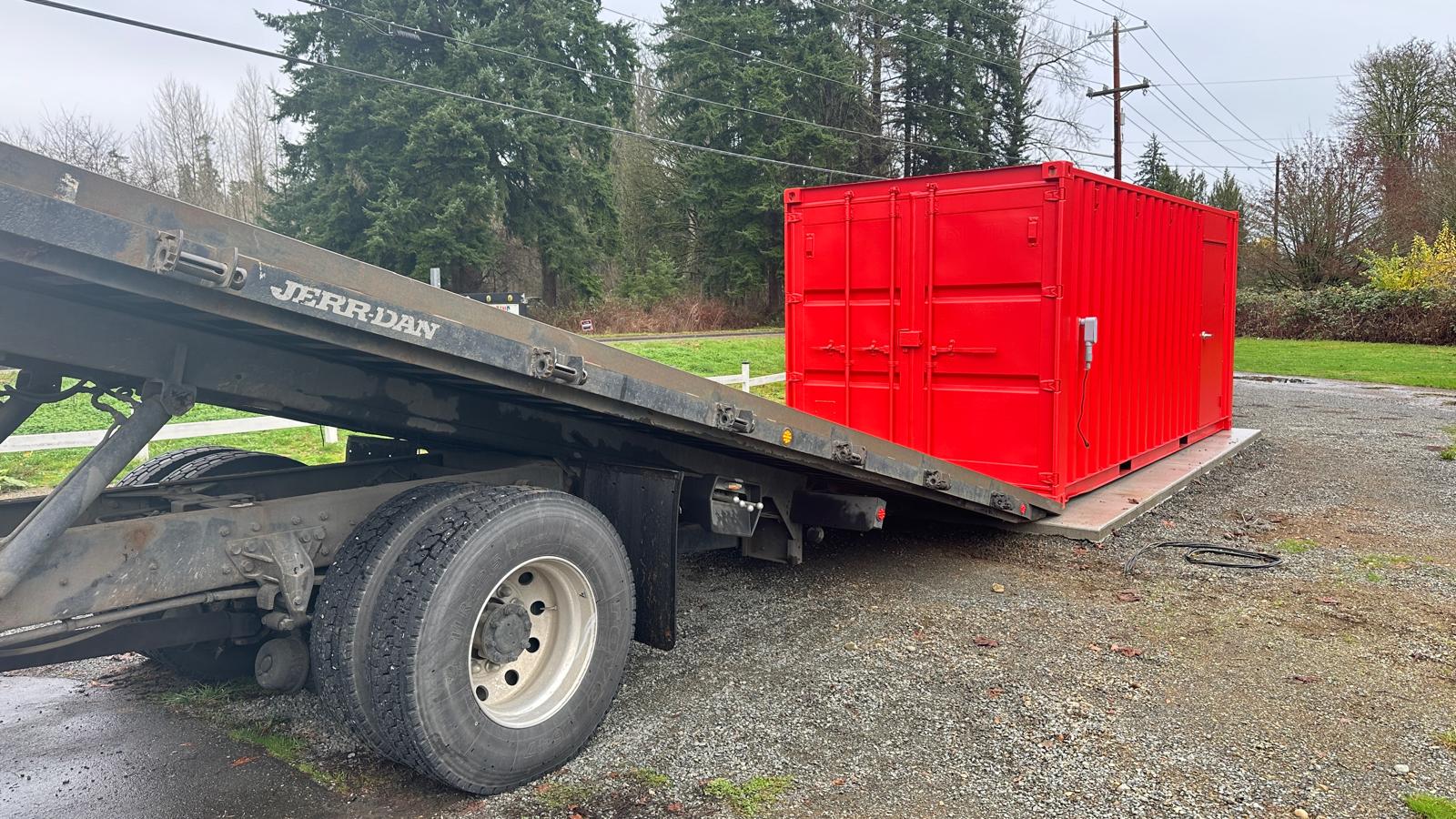
Absolutely. We are locals serving locals, and our specialized tilt-bed trucks operate daily along Hwy 223, Ellendale Ave, and the surrounding rural routes. Our experienced local drivers know how to maneuver around tight properties, agricultural access roads, and tricky residential drop-offs, ensuring your unit is placed precisely where you need it for maximum shade and access.
You shouldn’t have to worry about your property being damaged by the elements. Whether you are browsing container dimensions for a home project or need a heavy-duty shipping container rental for your business, we have the plan to keep your items cool.
Ready to beat the heat? Contact the Get Simple Box team in Salem today and let’s find the perfect, cool storage solution for your Dallas property.