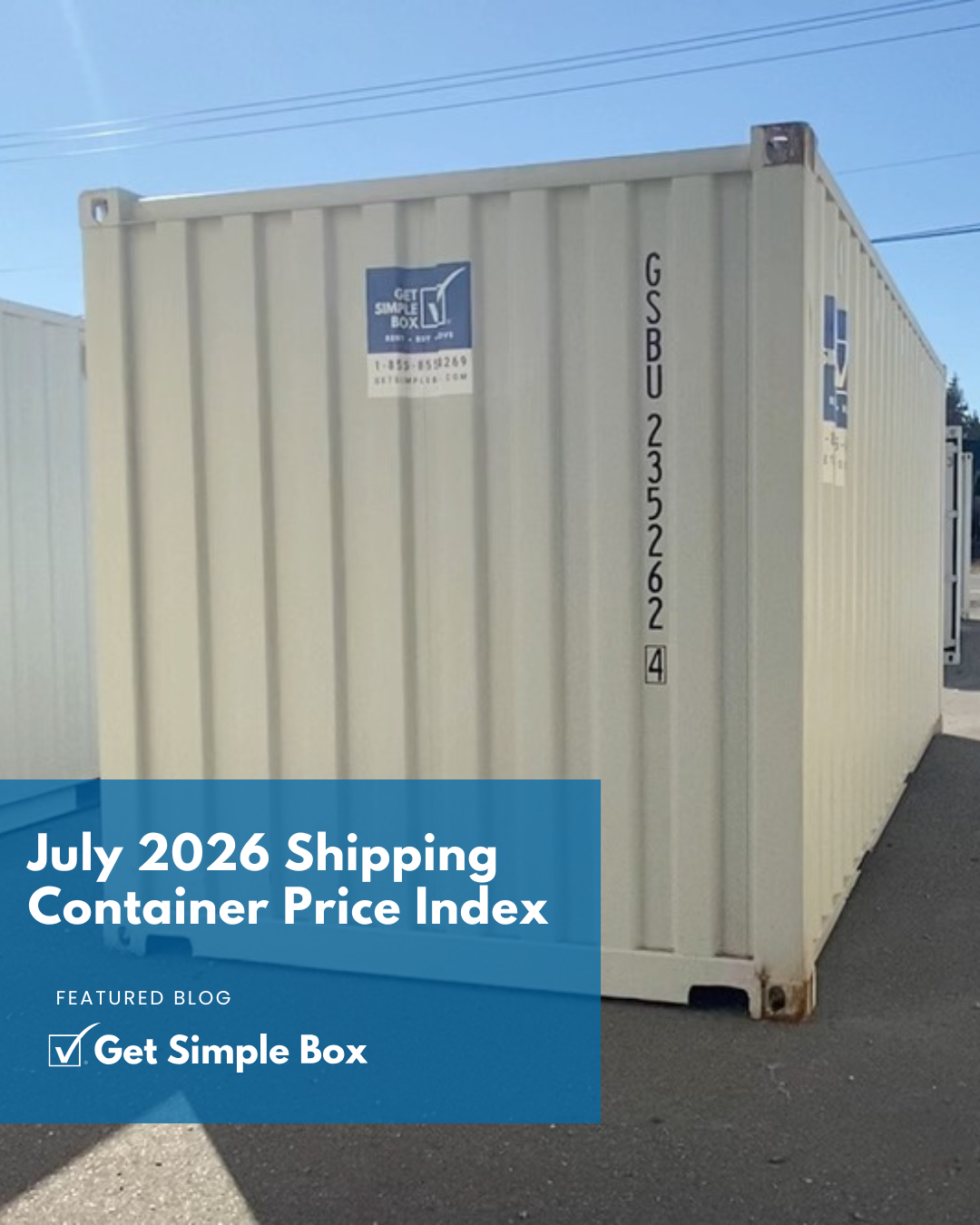
The Get Simple Box Container Price Index provides a monthly, data-driven look at retail pricing, inventory availability, and market trends for new (one-trip) shipping containers.
Rather than relying solely on global maritime indices or wholesale freight data, this report is compiled directly from on-the-ground observations across our local yards in the Pacific Northwest and Southwest. It reflects real retail pricing, current customer demand, and regional supply chain conditions.
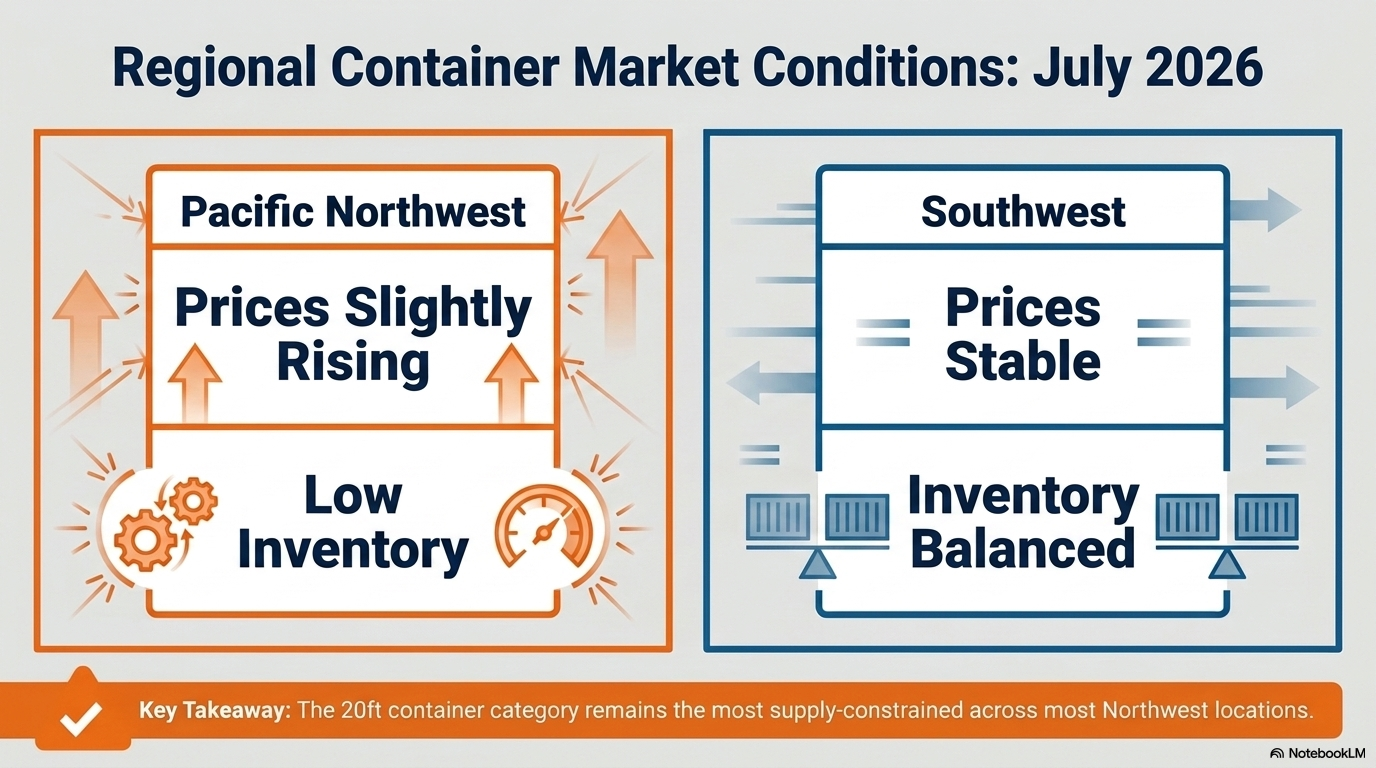
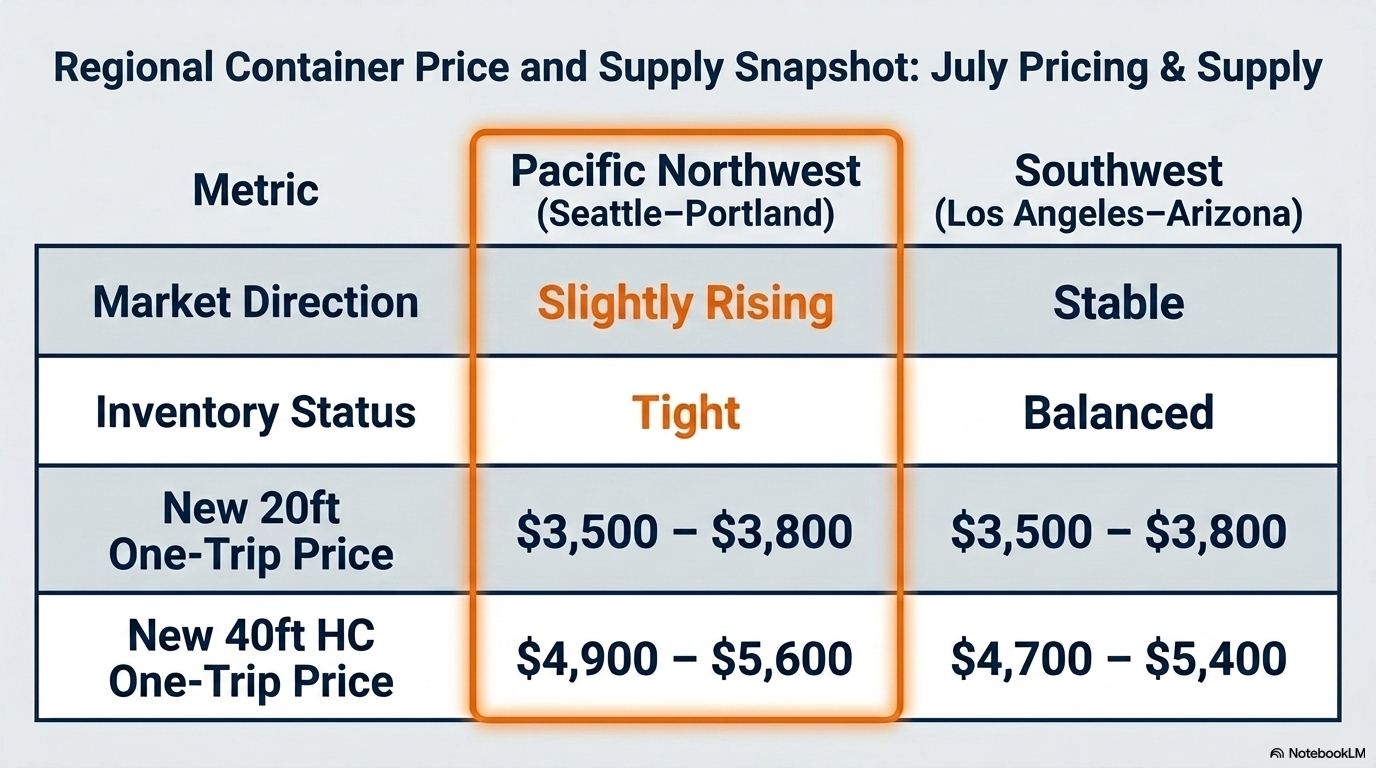
As of July 2026, retail prices for new one-trip shipping containers are showing mixed regional movement. While the Southwest market remains stable with balanced supply conditions, the Pacific Northwest is experiencing slight upward pricing pressure due to tighter inventory pools.
Overall, the container market is highly localized, with tighter availability in northern hubs and steadier equipment flows in southern corridors.
Pacific Northwest (Seattle–Portland Corridor)
Inventory remains limited across the Pacific Northwest, with the tightest equipment availability typically observed in Portland. Ongoing port dynamics and routing logistics through Tacoma continue to impact inland distribution timelines, occasionally introducing up to $100 in additional localized trucking costs depending on your final delivery location.
Overall, availability remains steady but is gradually tightening, particularly within the 20ft shipping container cost category.
Southwest (Los Angeles–Phoenix Corridor)
The Southwest market continues to benefit from a consistent, predictable inbound flow of new equipment through the Los Angeles port system, which serves as the primary distribution hub for the region. Because supply levels are currently keeping pace with summer commercial demand, buyers will find stable one trip container price points and flexible inventory selection across both major sizes.
Shipping Container Pricing FAQs
The cost of new shipping container 20ft models typically ranges from $3,500 to $3,800. Final costs depend on your regional location, local inventory constraints, and the transport distance from the nearest yard.
A new 40ft high cube container price generally ranges between $4,700 and $5,600. Prices in the Pacific Northwest trend toward the higher end of the spectrum due to tighter local supply, while the Southwest corridor benefits from more consistent port-to-yard equipment loops.
Why are shipping container prices regionally uneven?
Prices vary due to localized transportation costs, regional demand spikes, and proximity to major marine ports. Because major entry hubs like Los Angeles see massive volumes of incoming ocean freight, they maintain highly consistent yard supply. Inland or northern corridors require additional overland repositioning, which introduces higher baseline costs.
Are shipping container prices expected to go down in 2026?
Current shipping container price trends west coast data indicates that prices will likely stay within a moderate, stable range over the next 30 to 90 days. While local market supply can soften or tighten incrementally based on port activity, changes in retail pricing tend to happen gradually rather than through sudden volatility.
Because delivery is entirely dependent on distance, route logistics, and specific site access conditions. Separating the delivery cost ensures that buyers only pay for the exact distance and equipment required to position the container safely on their specific property.
If you are coordinating an upcoming summer project and need an accurate look at current inventory near you, contact your local Get Simple Box yard. Our local teams are here to provide upfront, transparent pricing, real photos of available inventory, and clear delivery options tailored directly to your site.